



In the DP, nothing happens in isolation. Move an assessment in one subject and the weight shifts everywhere else. When a student is deep in their EE, CAS is usually what slides. When ToK deadlines land on top of IA week, you can feel the stress travel through the whole cohort.
Ironically enough, the systems we used to track all of this were completely isolated.
Subject plans lived in one folder. CAS progress in a spreadsheet. IA timelines in another doc. EE milestones somewhere else entirely. As a coordinator, you’re constantly stitching together fragments, catching collisions late…never quite ahead of what’s coming.
Toddle was the first time I had that entire sight line. Everything in one place. And that meant I could spot pressure points early and support teachers and students before the crunch hit.
Here are four ways Toddle has made the DP easier to see and steer:
1. Seeing curriculum coherence at a glance
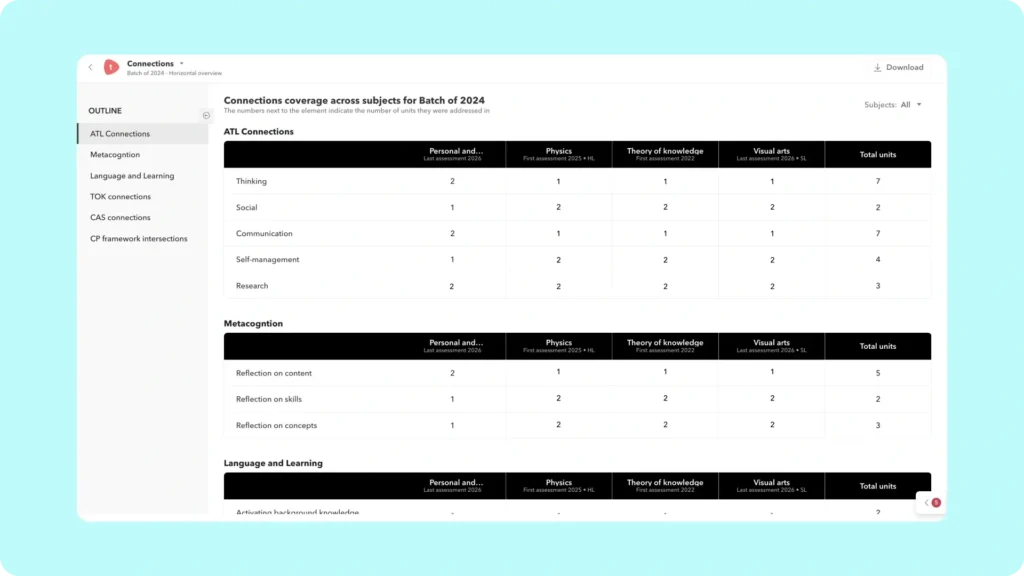
With Toddle, the entire DP programme sits in one place. I can open the planners, view the curriculum as a whole, and then also drill down by grade or subject.
I can spot where ATL skills are concentrated or missing, see which Learner Profile traits we’re reinforcing across grades, and trace how subjects are (or aren’t) connecting back to ToK and CAS. When I filtered through the Arts, for instance, I noticed strong creative ATL skills but almost no ToK links. That single insight led to a department-wide discussion on weaving in ToK questions more deliberately.
For me, this is what curriculum coherence looks like. Not a stack of plans sitting in a dozen folders, but a visual map of the entire programme.
2. Seeing progress across IAs, CAS, EE, and ToK in one place
Tracking progress used to mean juggling Excel exports from different departments. The data was all there, but pulling out what mattered took hours I didn’t have.
Now, Toddle Insights does that work for me.
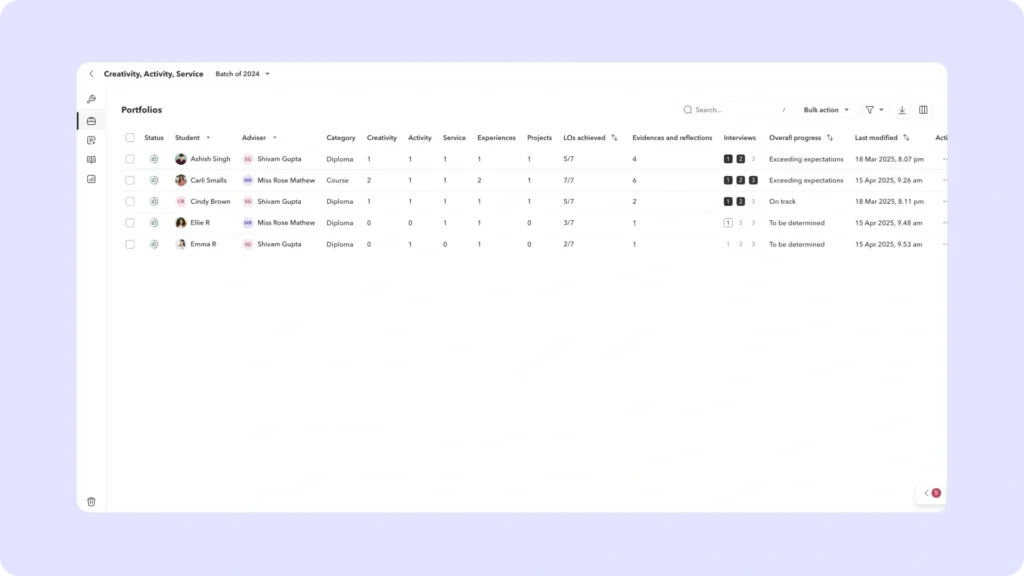
For IAs, I can zoom out to see how each subject group is performing, then zoom in to a single student to spot who needs support. Similarly, for CAS, I can track strand coverage across the cohort and see at a glance who’s supervising and which interviews are complete. EE and ToK milestones are just as visual and clear. I spend less time wrangling data, and more time working with teachers on how to act on it.
3. Seeing student workload proactively
We always had a calendar, but it lived in a Word doc on OneDrive. It was a long scroll of dates and never gave us a full picture. Too often we only realised clashes once students were already under pressure.
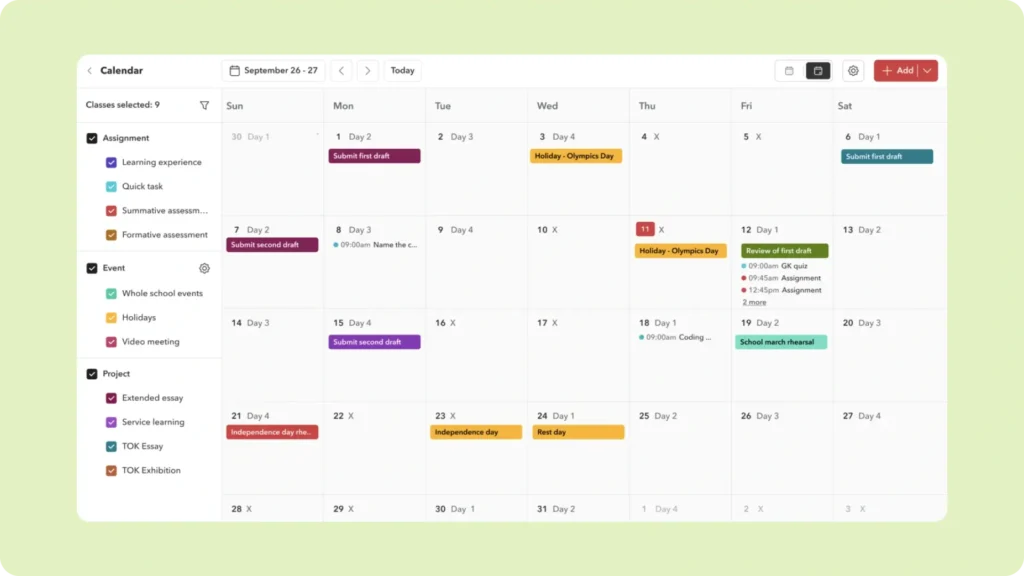
Now our DP calendar lives in Toddle. Internal assessments, IB submission deadlines, and whole-school events sit together in one beautiful interface. I can filter by type and even see the overall week at a glance.
With that visibility, I can step in early, coordinate with departments, and adjust before it overwhelms students.
4. Seeing progress at every level
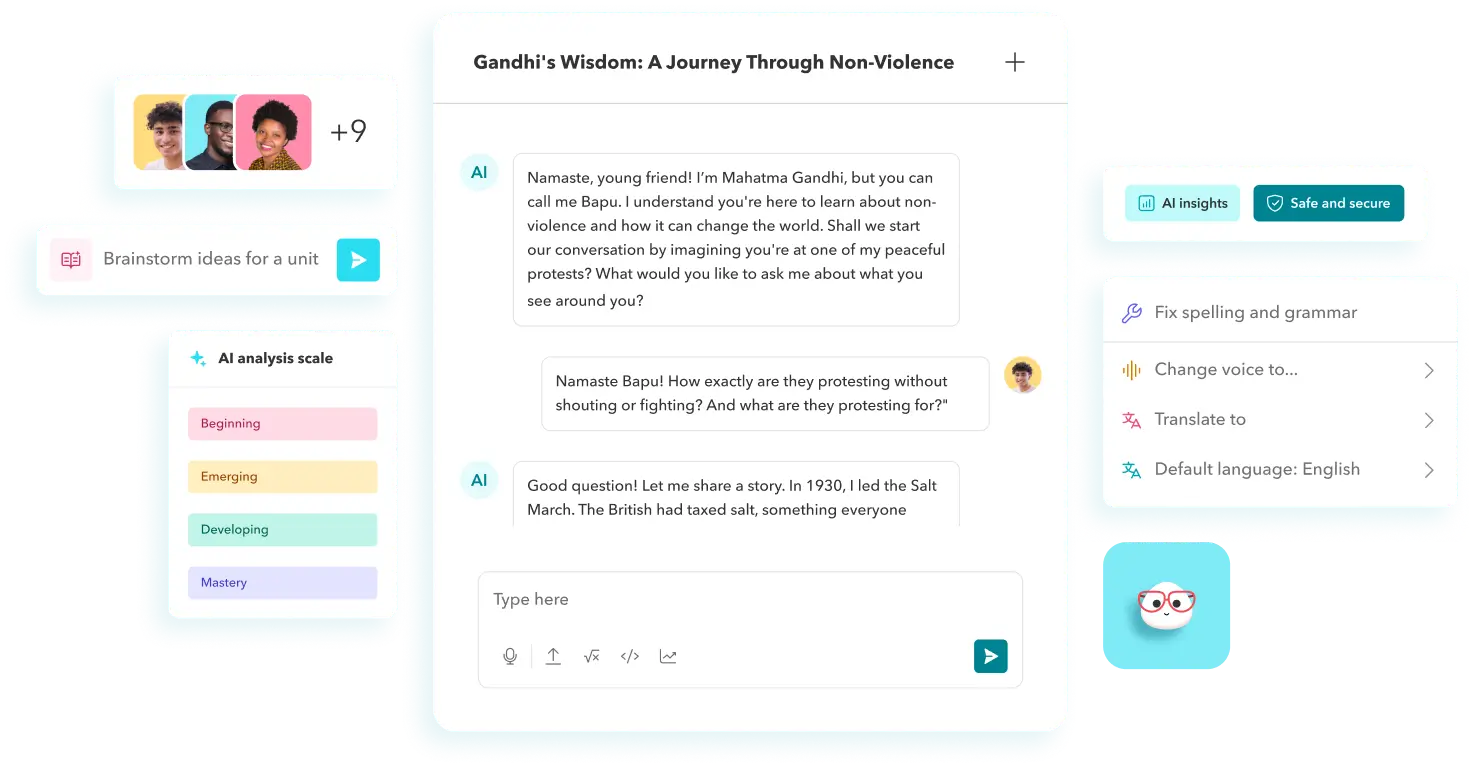
Alongside using AI for planning, our DP teachers also began exploring Toddle’s AI Tutors for IA prep and exam readiness. What struck me most, as a coordinator, was the level of insight our teachers got into each student and their classroom
In Maths, for example, a teacher set up a tutor on probability. The analysis showed him exactly where each student was – from those still working on the basics, to others ready for extended past paper questions, and even one who had already mastered the topic and could move on to conditional probability.
He could also see class-wide patterns: which concepts several students were finding difficult and needed to revisit together. It meant he could plan targeted follow-ups for each learner, while also adjusting the next lessons for the class.

At a time when many worry that AI leads to cognitive offloading, our experience shows the opposite: when AI makes thinking visible, it strengthens metacognition, sharpens teaching, and raises the bar for learning at every level. For me, that was the real win.