



Ask any teacher what good differentiation looks like and they’ll describe it perfectly. Learning experiences tailored to readiness levels. Scaffolding that meets students exactly where they are. Feedback that’s specific enough to move each child forward.
We know what it looks like because it’s what we’ve been taught to do. We believe in it.
And yet. Twenty-six students; each at a different point in their learning. Multiple units running at once. Portfolios to maintain. The daily reality of an IB classroom means we’re often differentiating in broad strokes – grouping students into three levels instead of responding to each individual.
Recently, we started experimenting with Toddle AI to see if technology could help close that gap. Here’s what happened.
Teachers saved 10+ hours while planning units
Rachel Beulah, one of the Grade 5 teachers at Shiv Nadar School, Chennai, used to spend her evenings creating differentiated learning experiences. Two hours per experience, sometimes more. She’d design the core task around the unit’s central idea, then build three versions: one scaffolded for students who needed support, one at grade level, and one extended for advanced learners.
Each version needed its own rubric, checkpoints, and feedback criteria. With six to eight experiences per unit, that’s 12-16 hours of planning before students even walk in the door.
Now, she inputs the unit essentials – central idea, key concepts, and lines of inquiry – into Toddle AI and gets a great starting point in minutes. She reviews the suggestions, recalibrates them for her students, and builds from there. Her planning process now takes a fraction of the time.
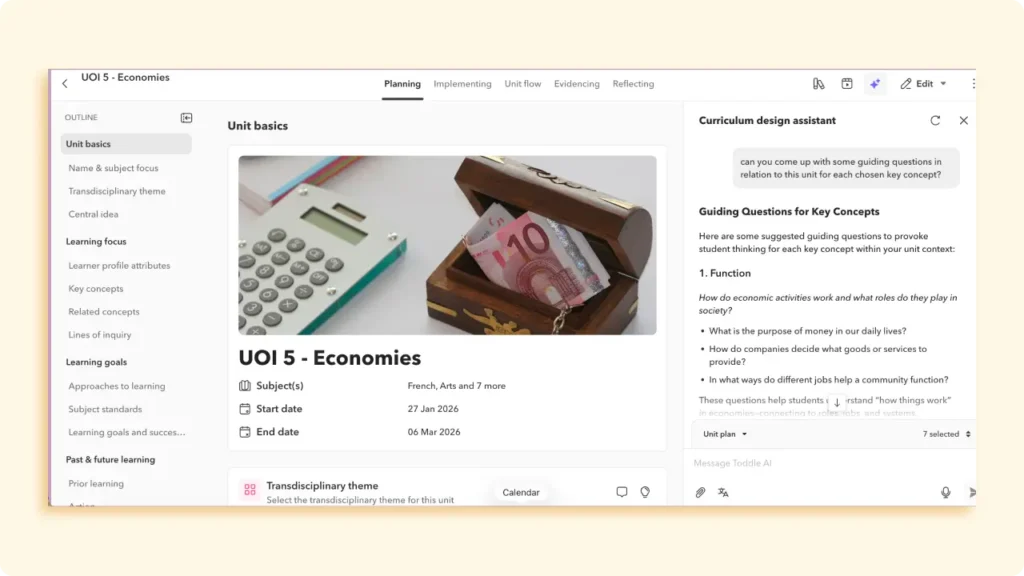
Ninety minutes saved per experience. More than 10 hours per unit. This time is now efficiently used in observation and responding to what’s happening in the classroom.
26 students pursue 26 different inquiries simultaneously
During our Grade 4 unit on Changemakers, students chose different leaders to research. One picked Malala Yousafzai. Another chose Martin Luther King Jr. A third wanted to study Mahatma Gandhi. By week two, we had 26 different research paths.
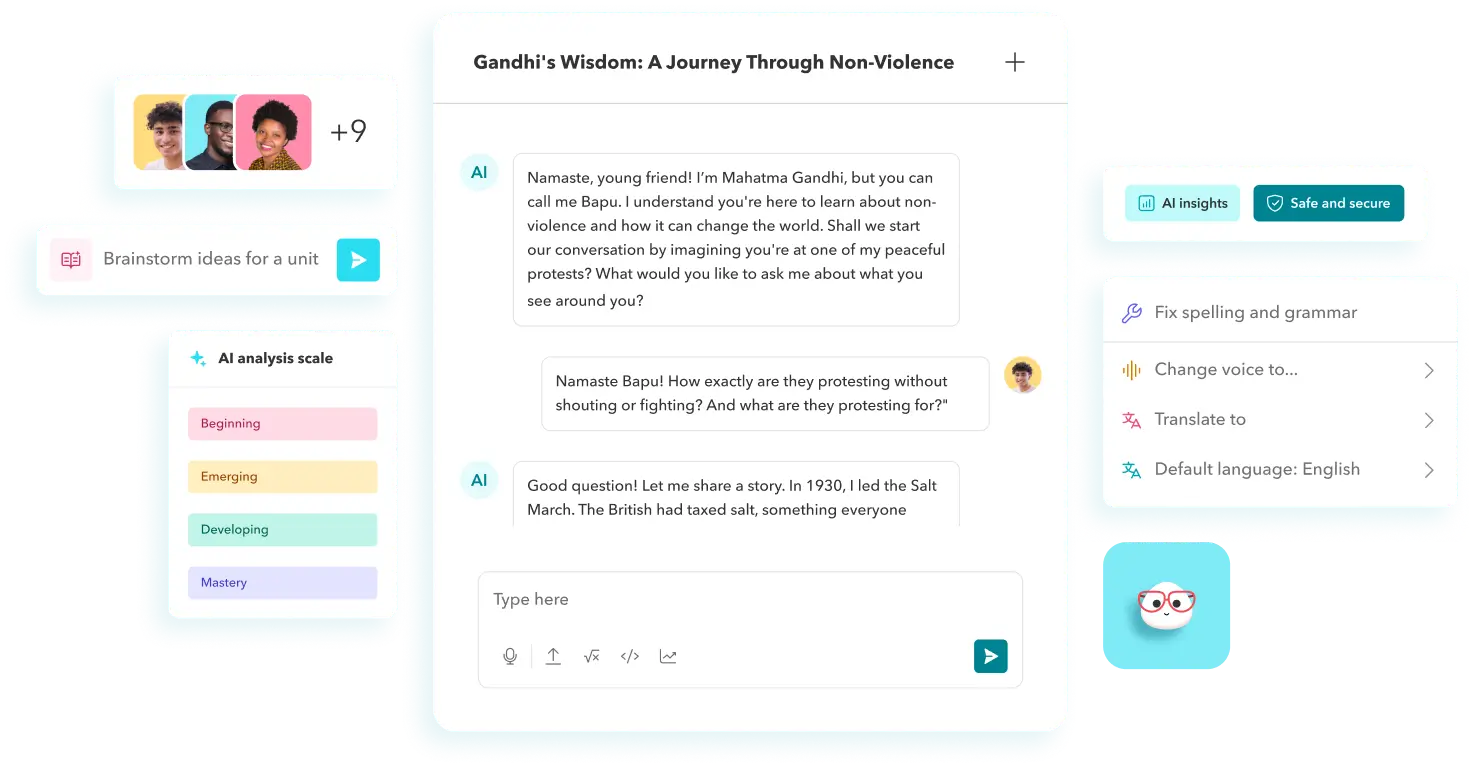
Nivedha Ganesan, one of our teachers, created an AI Tutor to support them. The tutor guided each student through their research by asking questions instead of giving answers: “What evidence supports that claim? How did their actions create change? What perspectives might challenge that view?”
Students had immediate support tailored to their specific topic.
Before this, so many different inquiry paths were impossible to sustain. With the AI Tutor, each student had continuous support for their specific question. The inquiries stayed individual and went much deeper than a unit would typically allow.
Specific, actionable feedback for every student
When you have 26 students, the feedback cycle is generally slow. Students submit work, wait days for comments, then lose track of what they were thinking when they wrote it.
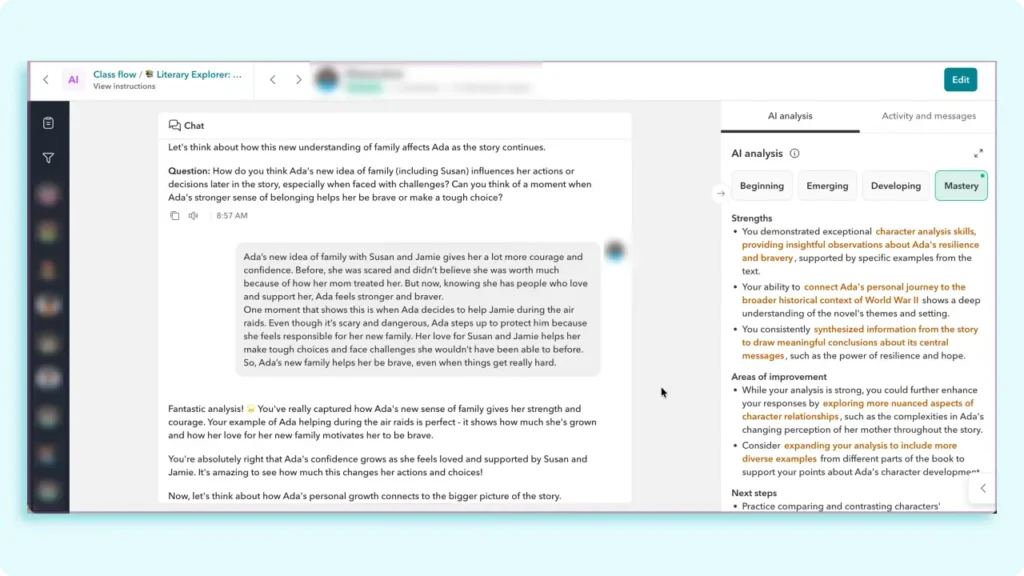
Toddle’s AI Tutors changed that for us. Now, when students submit their assignments, they get instant feedback on what they did well and what could be improved. Surface-level observations became well-reasoned arguments. Vague claims became evidence-backed analysis. The AI Tutor guided all the students through this process simultaneously.
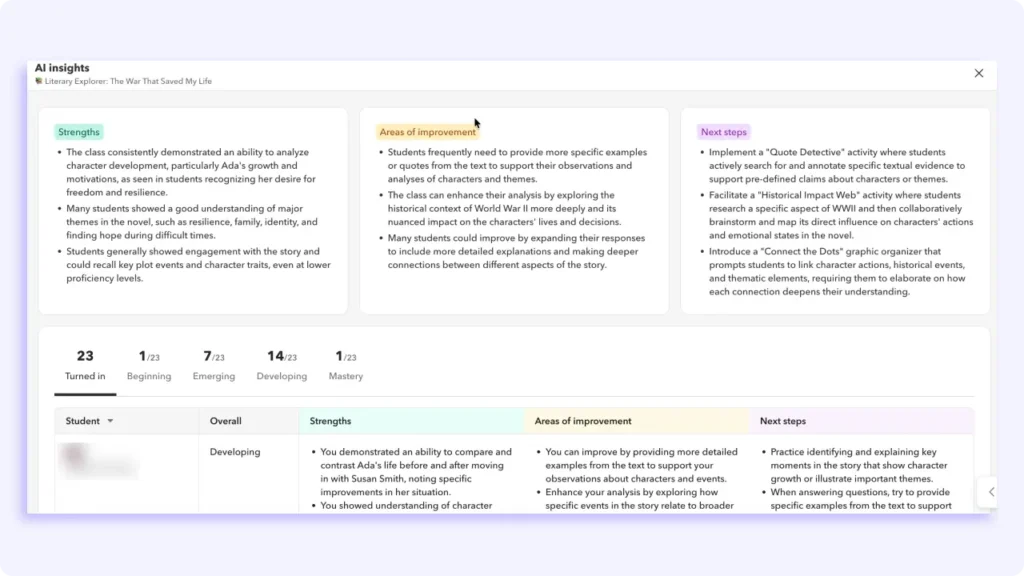
Nivedha could also see patterns emerge across the whole class with Toddle’s AI analysis dashboard. Some students were stalling on the same concept. Others were ready to go deeper. She adjusted her teaching the next day based on what she saw, and interventions that used to take a week of observation happened overnight.
Two years ago, differentiation was the thing we compromised on when time ran out. We knew what it should look like – we just couldn’t make it work for 26 students across six concurrent units.
Today, it’s built into how we teach. Every student pursues their own inquiry with scaffolding that meets them where they are. Every student gets specific feedback they can immediately act on. Teachers see learning patterns across the whole class and adjust their instruction accordingly.
We’re not choosing between depth and scale anymore – Toddle AI made both possible.