


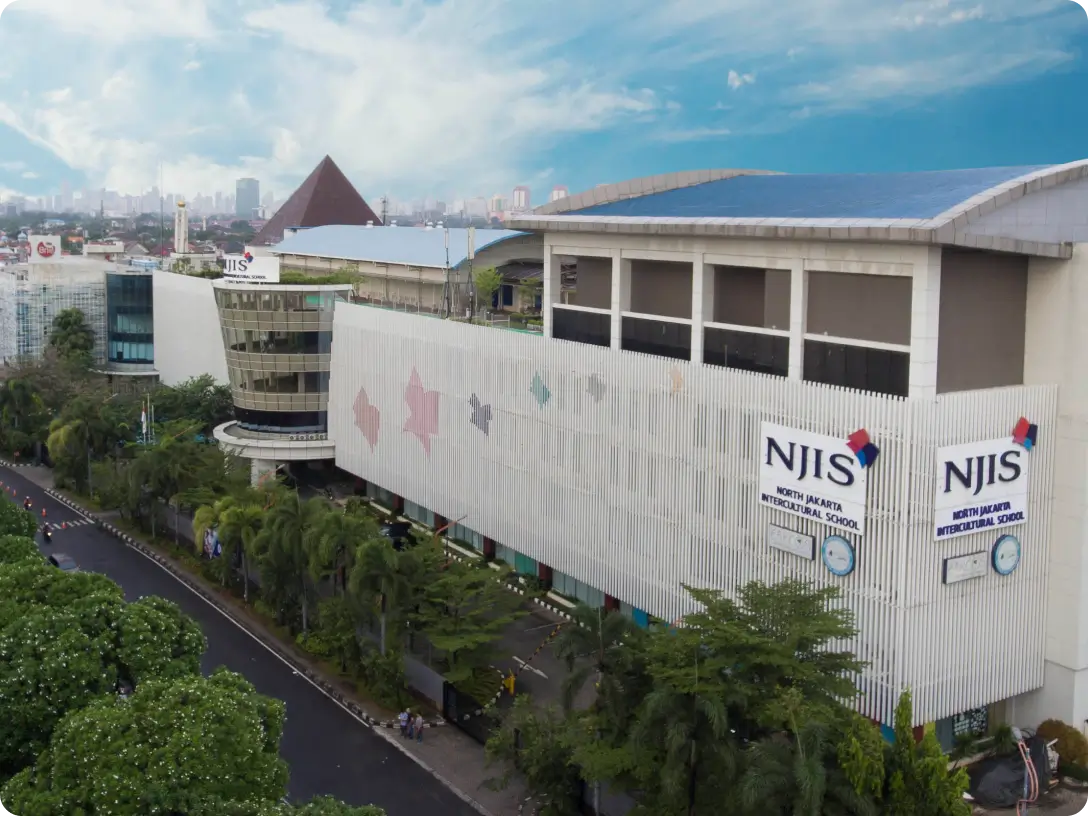
We run a small DP programme, 25 students across DP1 and DP2 at a continuum school in North Jakarta. We have been doing this long enough to have tried things that failed, things that surprised us, and a few things we had to argue for before anyone else believed in them.
Not all of what follows is universally popular. But it has made a significant difference to the quality of what our students experience in CAS, the Extended Essay, and TOK. We are sharing it because if even one of these shifts saves another coordinator a year of trial and error, it’s worth putting it out there.
Shift 1: We made it a habit for students to set their own goals (and follow through)
Goal-setting in a lot of schools is an exercise that happens at the start of term and is never looked at again. We know because that is roughly where we started.
What changed was moving it into the same space students use every day, and making it theirs. In Toddle’s student goals module, students set their own goals for learning and personal development, add milestones as they go, and upload evidence of progress. The goals sit in their portfolio. They can see them. Their advisor can see them. Parents can see them too, which creates the kind of shared accountability that a spreadsheet in the coordinator’s folder does not.
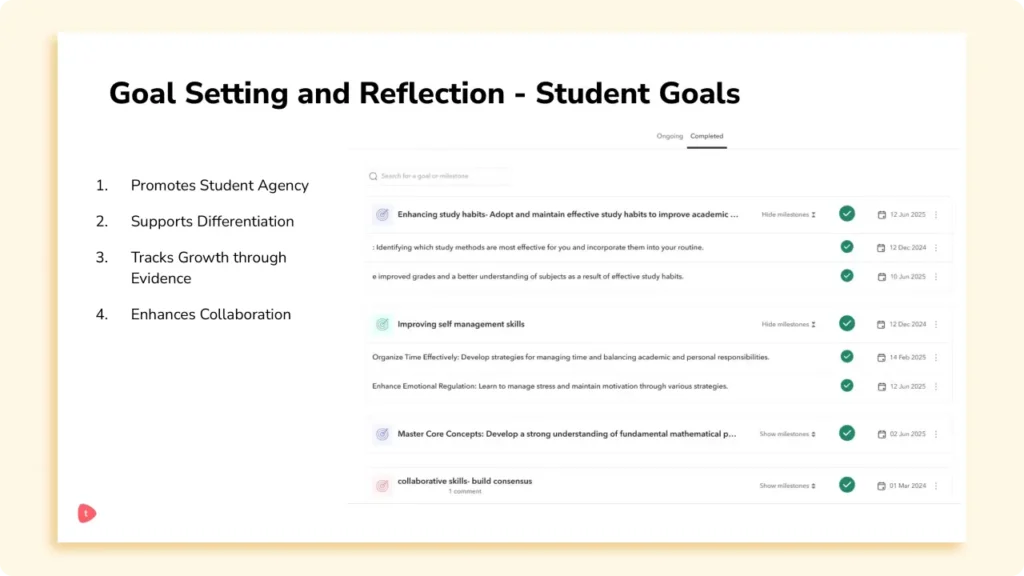
A student’s completed goals in Toddle, with milestones and evidence across academic and personal targets.
What we noticed over time is that when students document their own growth, they start to see it more clearly. The reflective awareness that CAS and ATL are trying to build does not come from being told to reflect. It comes from having a record you built yourself.
Shift 2: We turned CAS from a paper trail into a living portfolio
Our early CAS coordination involved a lot of email. Students not posting reflections. Advisors unsure which learning outcomes had been covered. Interviews that happened but were never documented anywhere findable.
The system we had made documentation difficult, so it did not happen consistently.
Since Toddle, the documentation is so seamless and visual that it enriches the learning rather than getting in the way of it. Reflections are organised under the seven CAS learning outcomes, with progress indicators showing how many pieces of evidence have been uploaded per outcome. Students and advisors can both see completion at a glance. There is no more scramble at the end of the year to reconstruct whether someone has covered all seven.
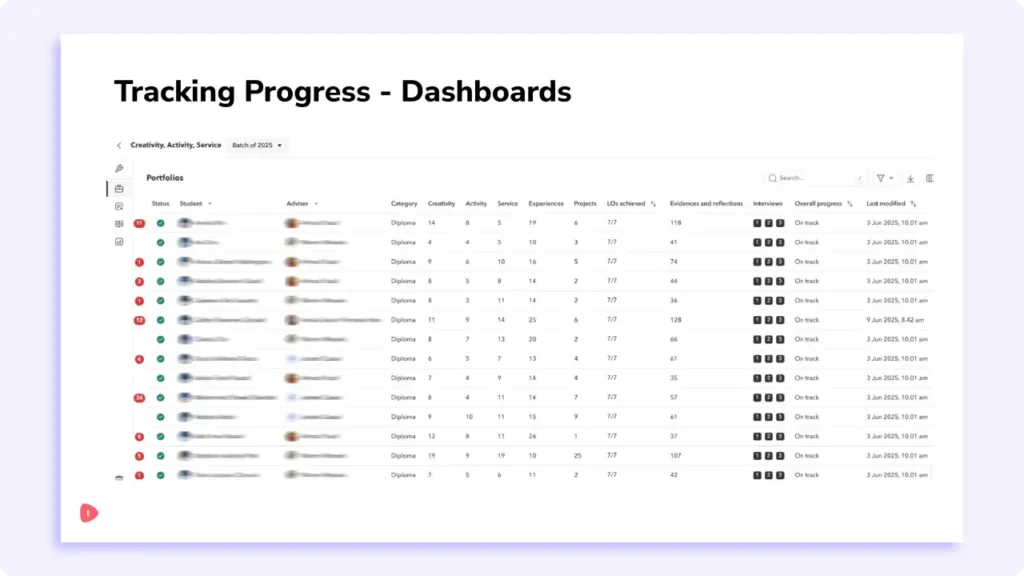
The CAS dashboard, showing each student’s balance across creativity, activity, and service, learning outcomes achieved, interview status, and overall progress.
As for interviews, students can record audio directly in Toddle, attach a file, share a link, or type a reflection into the space. The system organises the initial, midpoint, and final interviews in sequence. The adviser can see what is there without asking. Overall, the structured template really scaffolds the process and makes the next step clear for everyone involved.
Shift 3: Quieter students found their voice in the TOK classroom
TOK discussions can get heated. That is part of what makes them worthwhile. But in an international school, not every student is equally confident in English, and some find a loud group discussion genuinely difficult to be present in. The quieter students tend to sit alongside the conversation without being part of it.
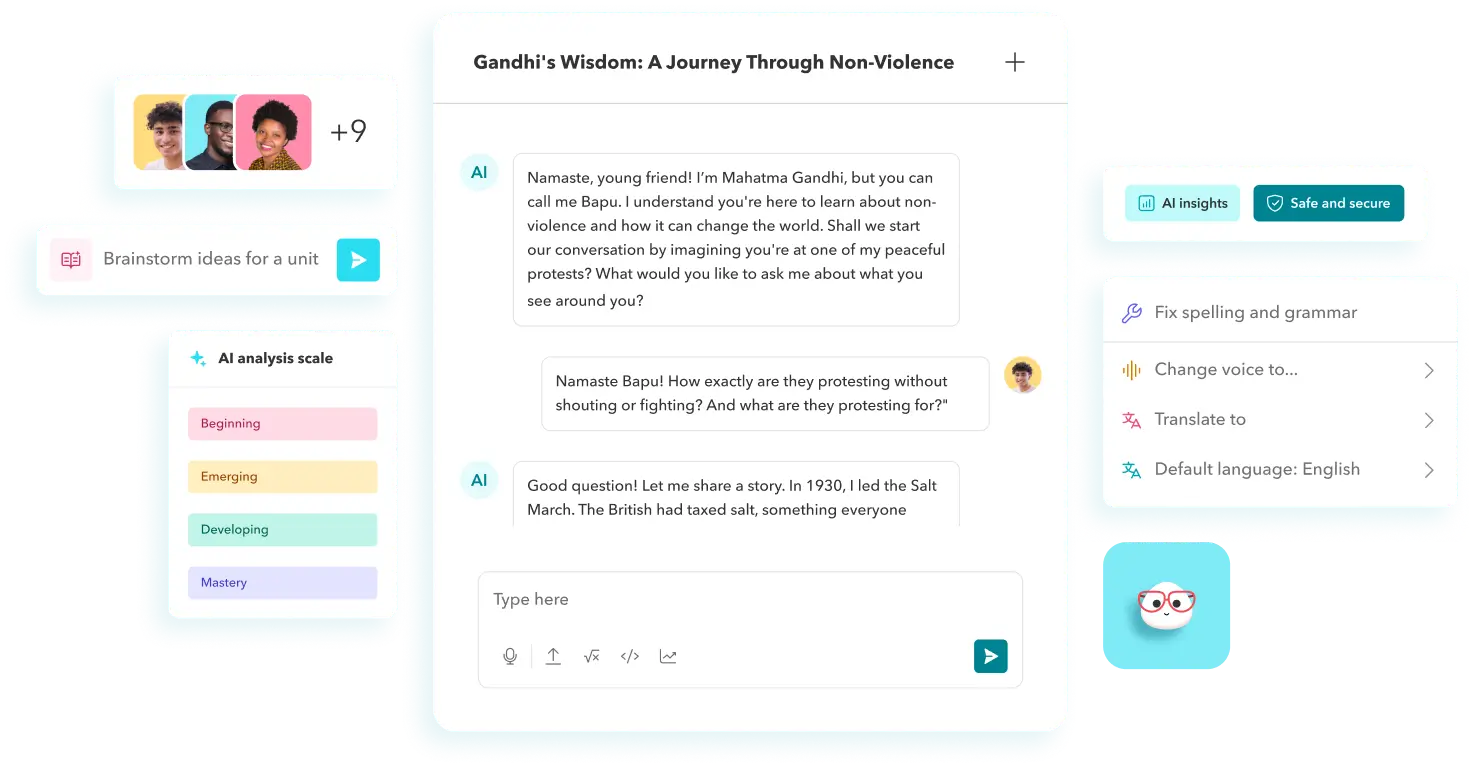
Using the Toddle’s AI tutors changed that.
For a recent session, we built an AI tutor around AI ethics in business: a retail company’s AI system made a pricing decision that led to significant overstock and financial loss. Students explored who was responsible and why. The analysis scale works like a mini rubric, from surface-level opinion at the Beginning stage through to nuanced, multi-perspective thinking at Mastery. Students can see exactly where they are and what more rigorous thinking looks like from there.
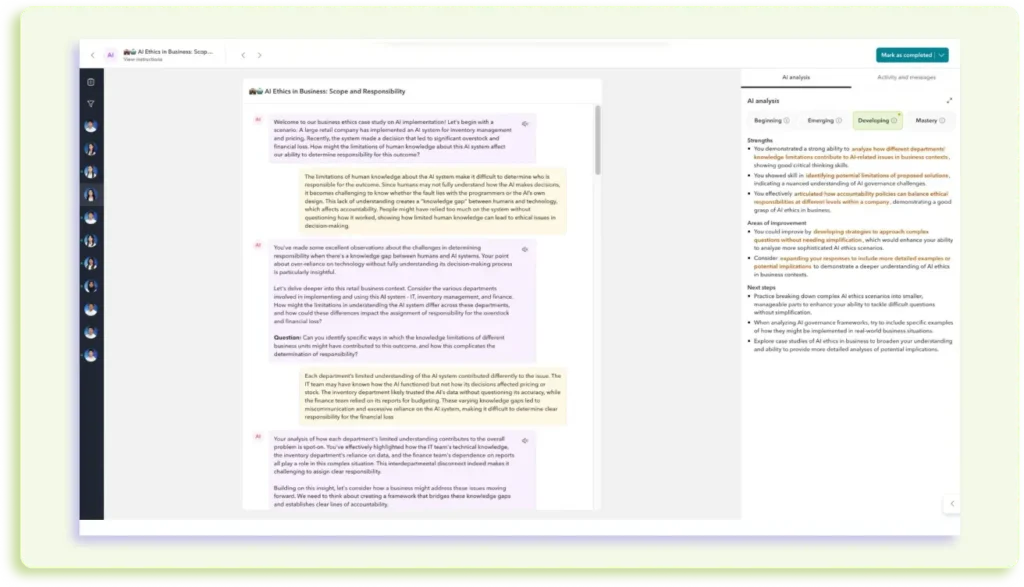
An AI tutor session on AI Ethics in Business, with a student conversation and real-time analysis showing strengths, areas to improve, and next steps.
Because the tutor can switch languages mid-conversation, students who are more comfortable in Bahasa Indonesia, Japanese, or Korean can explore ideas in their first language and refine in English. The barrier of expression was removed and it let us see what students were thinking.
Shift 4: We gave EE students a template, and we stand by it
We know this one divides people. The argument against it, that DP students should structure independent research without scaffolding, is one we’ve sat with. We just don’t agree with it. The Diploma Programme is an introduction to university-level research, not a test of whether students already know how. There is a difference.
Most of our students have never written a 4,000-word academic essay. Without some structure, the difficulty isn’t the research. It’s knowing where to begin. A template puts the cognitive energy where it belongs: the thinking. It’s a map to a mountain.
Ours has four tabs. The essay with structural guidance, criteria for self-review, reflection notes across the three interviews, and a deadline table. Students take our coordinator deadlines and break them down into their own smaller steps inside Toddle. They decide what to do and when. That planning process is part of the learning, not just preparation for it. It’s a great self-management exercise as well.
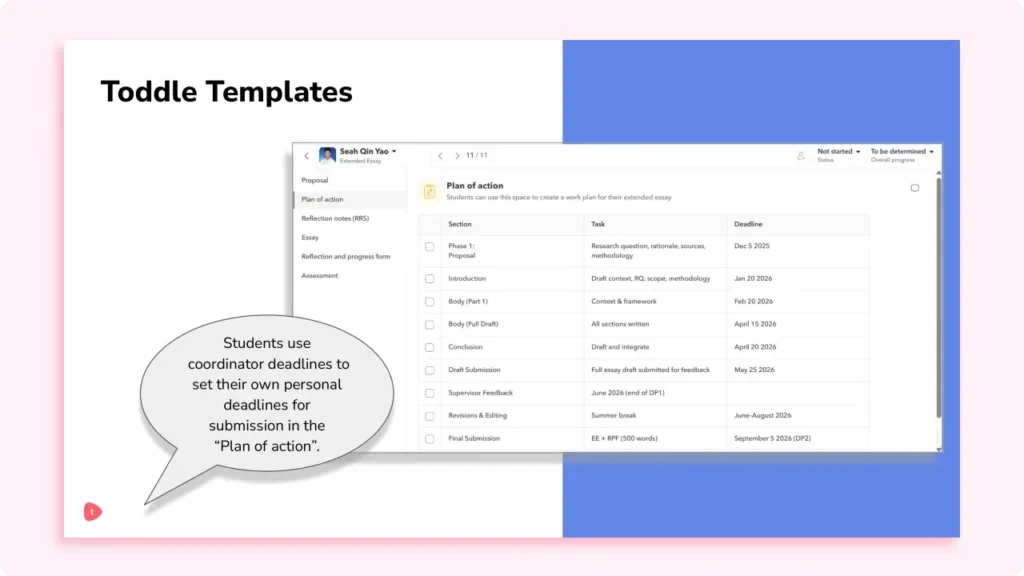
A student’s Plan of Action in Toddle, translating coordinator deadlines into a personal phased timeline for the Extended Essay.
Another thing that helps is that from day one, we ask students to upload the blank template into Toddle’s draft submission section. There’s nothing to review yet, but that’s the point. The essay now has a home. It feels less like something that might happen someday and more like something that has already begun. It’s a small step, but it seems to help.
What we’ve come to realise is that Toddle isn’t just a place to document projects and assignments. It helps students engage deeply with what the DP Core actually asks of them: to reflect, to grow, to take ownership of their learning. There are plenty of tools that can clear away what gets in the way of learning, but only great tools make the learning itself better, and Toddle is one of them.