



We’ve always had a clear structure for managing behaviour and supporting wellbeing at Amadeus International. Four levels of intervention with defined escalation paths. Mentor teachers responsible for their groups, and clear protocols for when things need to reach administration.
What we didn’t have was a platform that could keep up with how we actually operate.
Our previous system was powerful but difficult to use in practice. Incidents were logged, but there was no visibility on whether actions had been taken. Every staff member could view all incidents, which raised real concerns around privacy and safeguarding. The learning curve was steep enough that staff stopped engaging with the behaviour module altogether.
If our old system felt like working in a complicated Excel sheet, Toddle feels like picking up an Apple product. It’s intuitive, flexible, and adapts seamlessly to how our school operates.
We expected a year-long transition. It took an afternoon.
We’d originally planned to move behaviour management to Toddle the following academic year. We thought we’d give ourselves a full year to prepare. But then our tech coordinator and I sat down to explore the setup, and realised this isn’t hard at all.
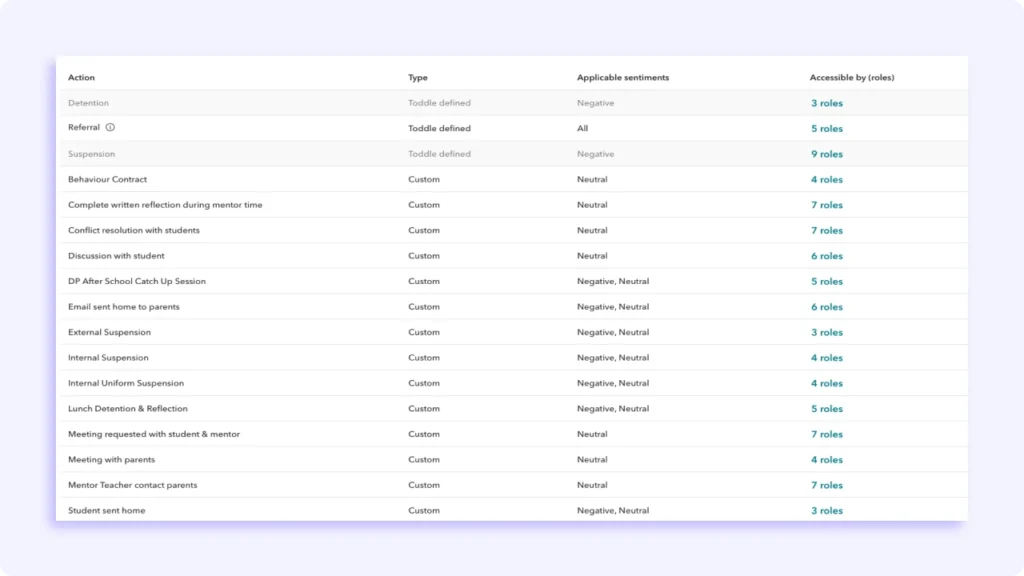
Our tiered wellbeing approach, from low-level mentor interventions to admin referrals, mapped onto Toddle so seamlessly. Teachers could log incidents using pre-configured categories instead of writing everything from scratch, and templates could be tailored for different types of behaviour. We could configure the module to match exactly how we work.
So we rolled it out that same afternoon, months ahead of schedule, and it’s only been upward since.
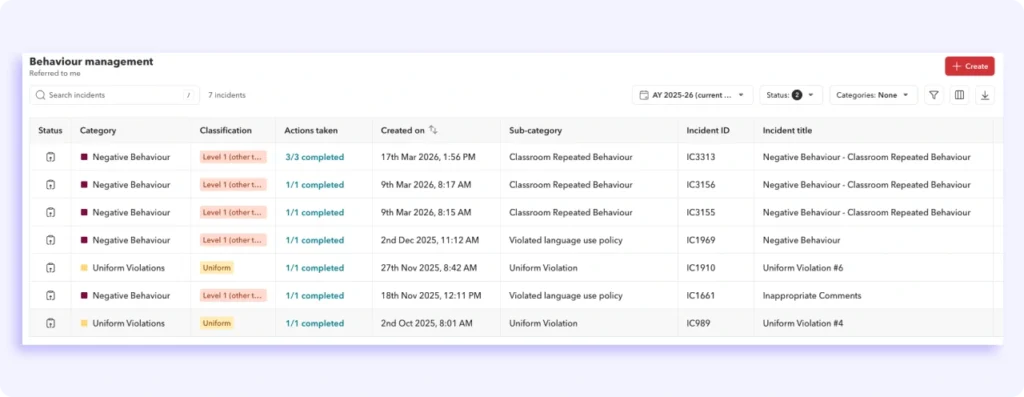
Teachers are logging more frequently now, and more importantly, they’re following through. On our old system, incidents lived on a running scroll on a single page. It was easy for things to get lost. Now teachers can see whether an action has been taken and what comes next.
Documenting an incident and following up with a family all happen in one connected flow.
The right people see the right information, and safeguarding is stronger for it
One of the biggest challenges with our previous platform was that everyone could see everything. There was no way to control who had access to sensitive information, which is a real concern when you’re dealing with safeguarding.
Toddle gave us precise control over that. Mentor teachers now see only the students in their group. Staff see only the reports they’ve created and the follow-up on those incidents. For serious cases, there are confidential sections where I can upload student statements and other sensitive documentation that only designated staff can access.
These controls also help me act faster. I used to get automated emails for every single incident, regardless of severity, and had to sift through all of them to find what actually needed my attention. Now I only get notified for admin referrals and higher-level incidents. Everything else is handled by the people responsible for it. I open Toddle and can immediately see whether today is just positive points and a couple of low-level incidents, or whether there’s something that needs me.
I can spot a concern weeks before it reaches my desk
Low-level incidents used to be easy to miss. A student might have a growing number of minor disruptions, but none of them individually would get flagged. On Toddle, those patterns become visible. I can open a student’s profile and see their behaviour over time, and spot a concern early enough to step in before it escalates.
I’ve started building dashboards and exploring AI Insights to ask bigger questions: where are the most detentions happening, and why? Which grades are generating the most incidents that need my attention?
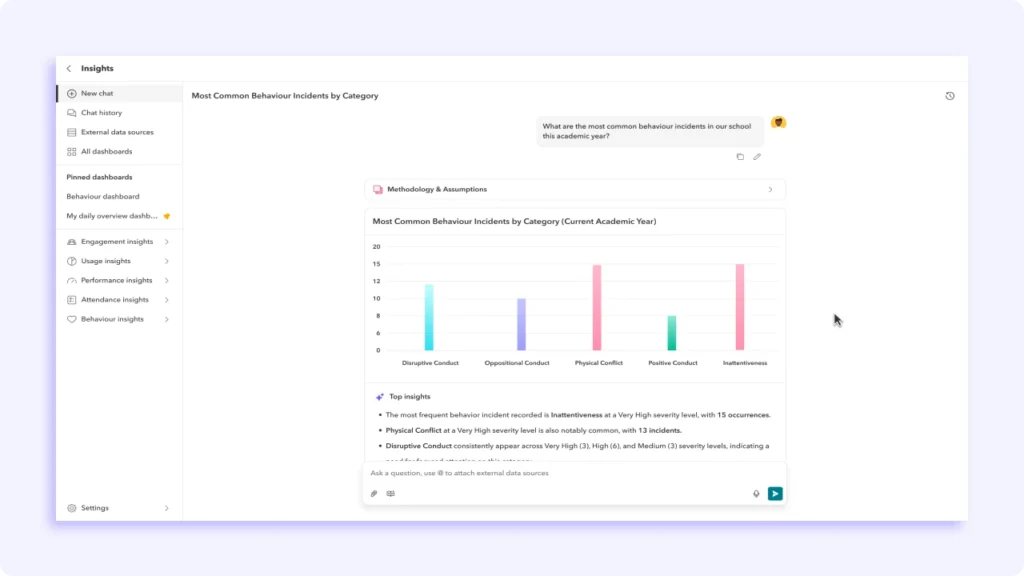
That kind of analysis wasn’t possible before because the data was never structured in a way that allowed it. I’m still in the early stages of sharing these views more widely with coordinators and mentor teachers, but the picture is already much clearer than anything we had before.
When we sit down with families, the documentation tells the full story
When we have a conversation with a parent about their child’s behaviour, or when we need to hold a student accountable, the documentation has to be thorough.
Earlier this year, we dealt with a particularly challenging case of bullying that unfolded over multiple weeks and involved several students. My job was to piece together what had actually happened from different accounts and different incidents. With Toddle, all of the information was already in one place. Behaviour reports from teachers, action records, prior incidents. I was able to build a complete, connected case.
By the time I sat down with the student, the evidence was clear and well-organised. I could walk into that conversation feeling prepared, not anxious. That matters, because these are some of the hardest conversations we have.
When we spoke with parents, they could see that their child had been treated fairly. Managing behaviour has to feel fair, and in every student’s best interest. Toddle gives us the tools to make sure it is.
A platform that matches how we care
At Amadeus, we already had a thoughtful culture around behaviour management. What changed is that we now have a platform that makes our work visible and connected in ways that weren’t possible before.
Teachers trust the system because they can see follow-through. Families feel confident that their children are being treated fairly. And I can focus on what actually matters: the conversations with students and the relationships with families.
For something as important as student wellbeing, that’s exactly what we needed.