



In 1984, educational psychologist Benjamin Bloom posed what he called “the two-sigma problem.”
His research showed that students who received one-to-one tutoring performed, on average, two standard deviations higher than those in conventional classrooms, meaning the typical tutored student outperformed 98% of their peers.
Bloom defined this as the Two Sigma Problem: the challenge of discovering methods of group instruction that could help all students achieve the same level of mastery typically seen only in one-to-one tutoring.

Through his studies, Bloom identified several key factors that made tutoring so effective:
- Personalised instruction: Teaching that adapts to each student’s pace and understanding
- Formative feedback with corrective processes: Constant checking for understanding and timely adjustment
- Increased time-on-task: Sustained engagement that keeps learners active and motivated
The “problem,” as Bloom saw it, was never that tutoring worked, but that education needed ways to scale its benefits, so every student could reach mastery, not just the few with access to personal tutors.
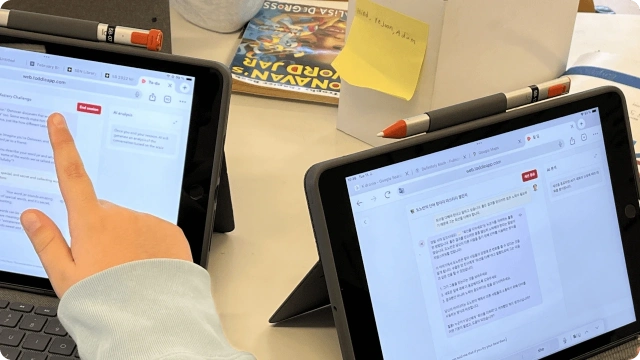
At the International School of Prague (ISP), educators have been exploring how Toddle’s AI Tutors can offer a more personalized learning experience for their students. Toddle AI tutors adapt to each learner’s unique needs, much like one-on-one human tutors, helping students grow at their own pace. In doing so, Toddle’s AI Tutors are bringing Bloom’s decades-old vision of truly individualized education to life.

1. Personalised instruction
Inquiry is at the heart of the Primary Years Programme, but personalisation within inquiry takes time. In the PYP Exhibition, for example, students are expected to identify real-world issues that matter to them and design inquiries around those ideas. Teachers often spend weeks helping each child refine their focus, moving from broad curiosities to meaningful, researchable questions.
We introduced Toddle’s AI Tutors as a scaffold for this process. Each tutor was designed to ask thoughtful, open-ended questions such as “What fascinates you about this issue?” or “Who might be affected by this problem?,” guiding students to clarify what they truly cared about.
One Grade 5 student began with three unrelated ideas: therapy horses, vertical farming, and crocheting. Through a dialogue with her tutor, she explored what connected them and found a meaningful line of inquiry that reflected her curiosity.

This wasn’t about saving time; it was about extending the kind of personal attention Bloom described: attention that listens, questions, and helps each learner find direction.
2. Feedback and correction in real time
Bloom’s research showed that one of the key advantages of tutoring was immediate, individual feedback – every misconception caught early, every success reinforced. That’s what we’re beginning to replicate at ISP with Toddle’s AI Tutors.
Each student interacts 1:1 with their tutor, receiving personalised prompts and real-time corrections that adapt to their responses. The feedback is clear, specific, kind and much like a teacher sitting beside them.

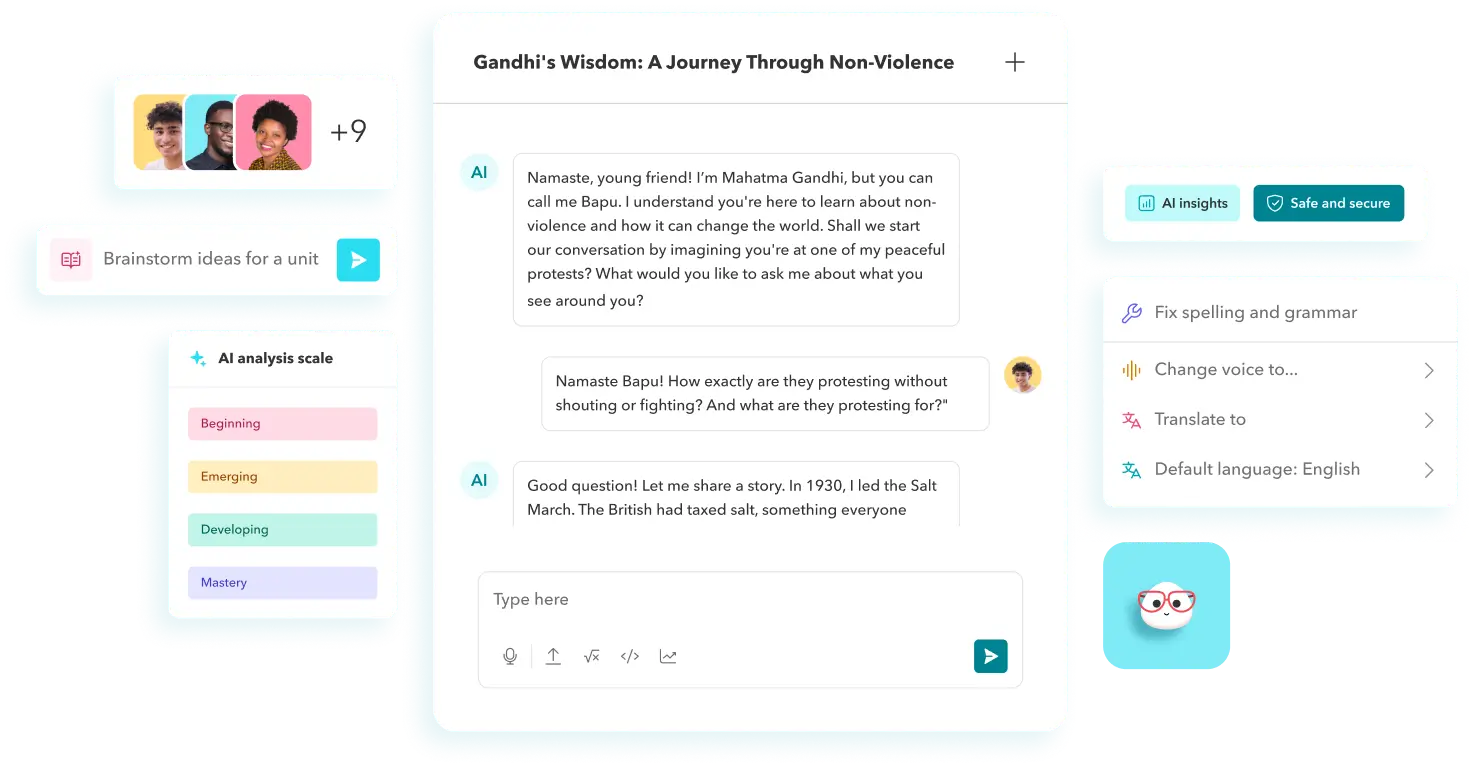
For teachers, every chat becomes visible learning data. Toddle AI analyses student conversations and identifies areas of strength, improvement, and next steps, making it easier to spot learning patterns and plan support.

At a class level, these insights come together to show broader trends, which concepts most students have mastered and which ones may need reteaching.

3. Extending time-on-task through active dialogue
Bloom believed that learning happens most powerfully when students become active participants, when they reason, explore, and construct understanding for themselves rather than simply receiving information.
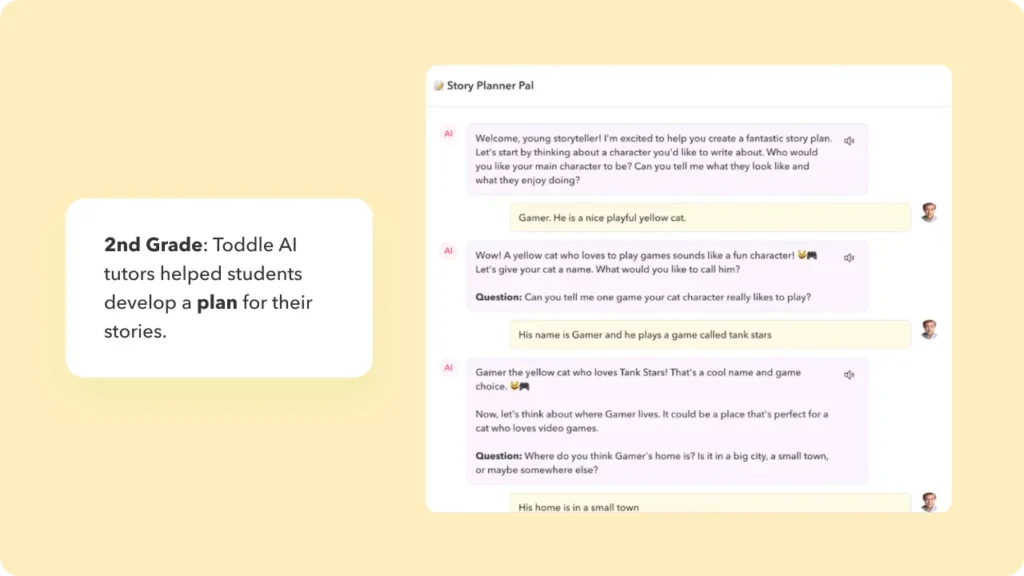
Toddle’s AI Tutors bring that sustained engagement into our classrooms. In Grade 2, the Story Planner Pal tutor guides students to build stories through conversation, asking about characters, motivations, and settings. Students stay mentally present, shaping their stories through reasoning rather than filling out templates.
In Grade 4’s Changemakers unit, students interact with tutors modelled after leaders like Malala Yousafzai and Martin Luther King Jr. These conversations push them to think about justice, courage, and leadership – ideas that deepen understanding and keep curiosity alive.
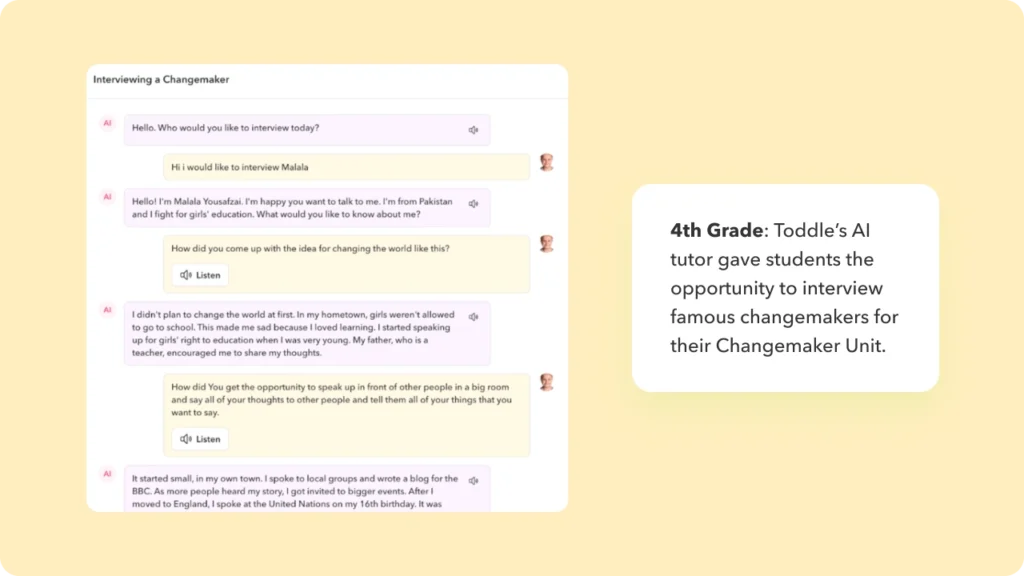
That ongoing dialogue keeps students in the zone of learning Bloom described: active, purposeful, and reflective.
A modern answer to Bloom’s question
Bloom’s Two Sigma Problem wasn’t just about performance gaps; it was about attention and how the right mix of personalisation, feedback, and engagement transforms learning.
At ISP, Toddle’s AI Tutors are helping us scale those same conditions. They don’t replace teachers, but instead they multiply their impact. They help students move at their own pace, reflect in real time, and stay engaged longer.
We haven’t fully solved Bloom’s two-sigma challenge, but every day, we’re getting closer to what he imagined: classrooms where every learner receives the kind of care, feedback, and focus once reserved for one-on-one tutoring.