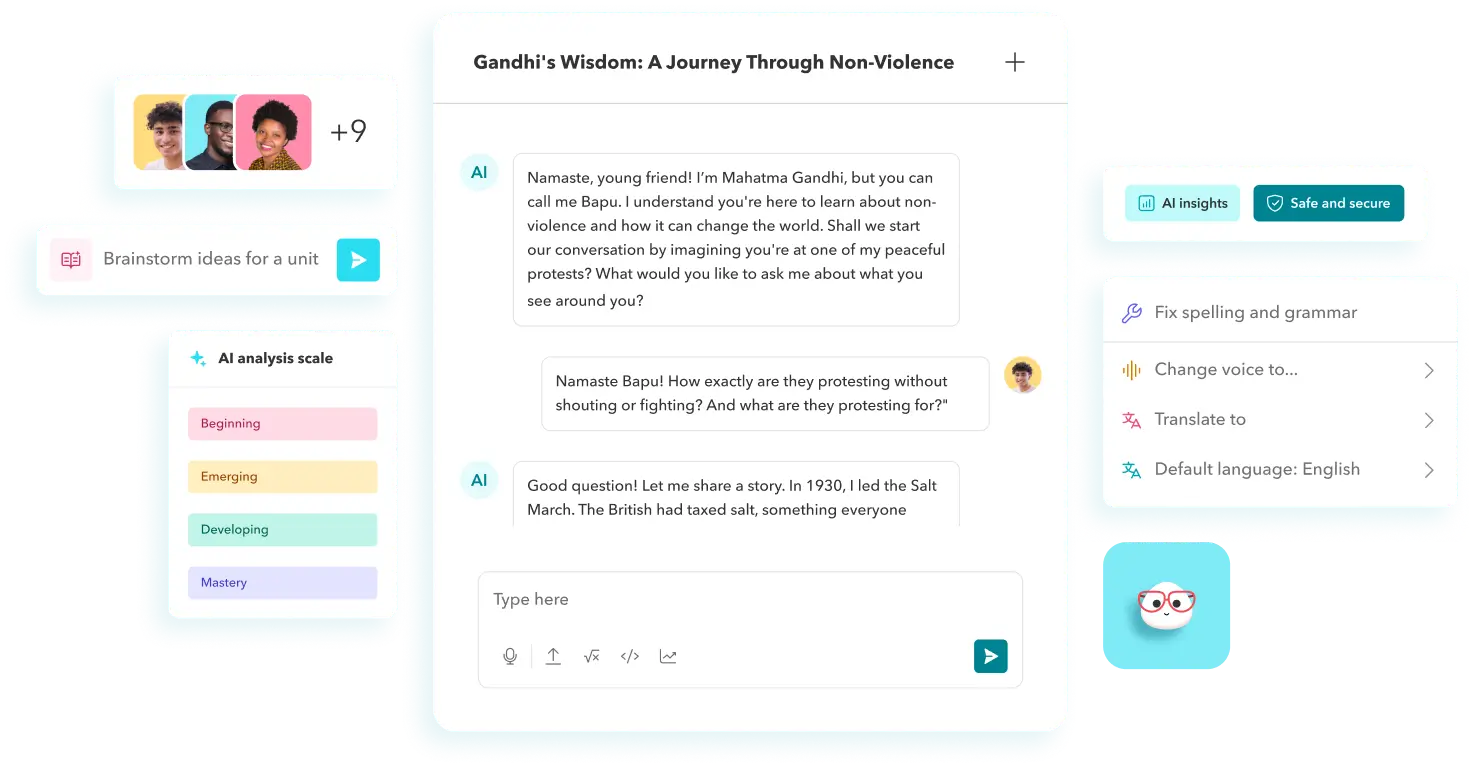




Look at the IB’s PYP framework, and you’ll find four quadrants: monitoring, documenting, measuring, reporting. Reporting is the smallest of the four, but for years schools have placed almost all their weight there.
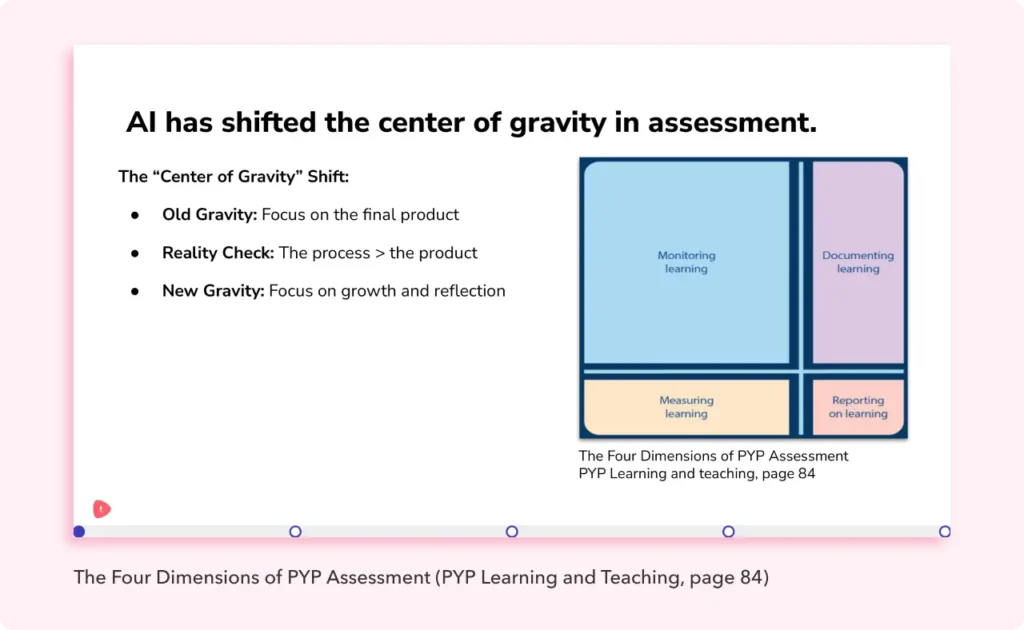
The richest evidence sits in the other three. The spaces where a child’s actual learning journey takes place. When we only celebrate the final product, we ignore the messy, beautiful process of getting there. For the student who faces setbacks, pivots, and ultimately grows, the true victory isn’t just the final score. It’s the entire climb, and that is the story our families deserve to see.
The gap is fixable. But only if we shift the weight off reporting and onto the other three quadrants: monitoring, documenting, and measuring.
So what does it actually take to get each ingredient right?
Monitoring: conferring with every student at once
The limitation of monitoring has always been the same: a teacher can genuinely confer with one student at a time.
We started using AI tutors to change that. Before a Grade 4 unit on light and sound, we configured a tutor with the learning goals and success criteria built in, and every student interacted with it simultaneously. It asked open questions, gave immediate feedback, and adjusted its approach when a student said they didn’t understand. At the end we had a class-wide summary with each student’s level, their strengths, and their next steps all in one place.
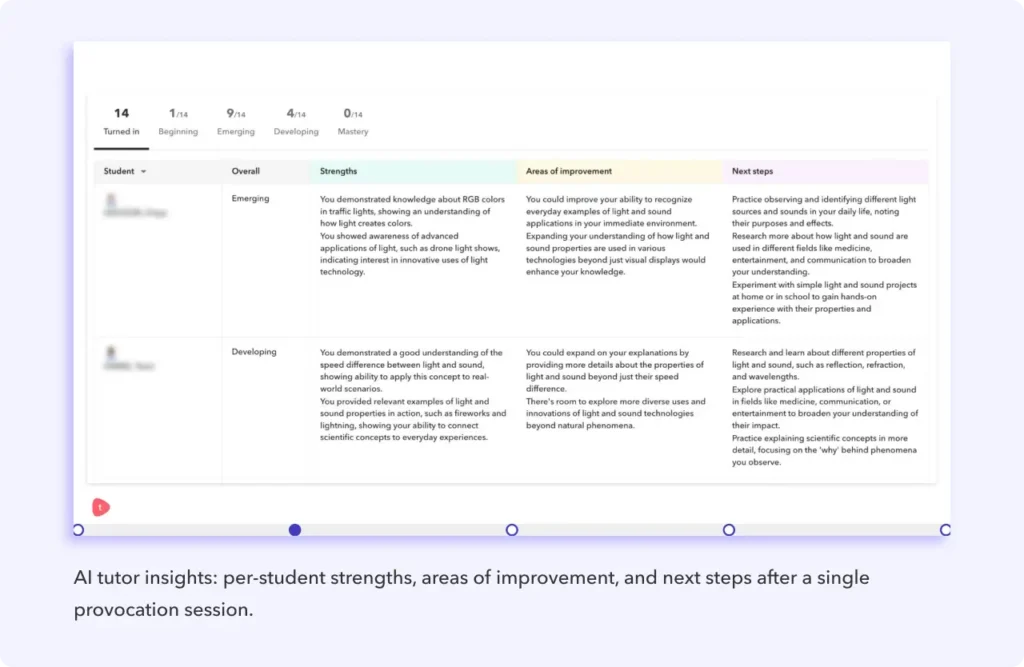
Think of it as conferring with every student in the time it normally takes to confer with one. That data fed straight into student goal setting, and because students had already seen their own starting point against the success criteria, the goals they set felt like something they actually owned rather than something handed to them. But ownership needs somewhere to live, and that’s where documentation comes in.
Documenting: future you will thank present you
Documenting is the part teachers are naturally good at: portfolios, photos, celebrations of learning. What I’ve had to help teachers with is how we organize that documentation is what determines whether we can actually use it when it matters.
Tag your standards. Organize by line of inquiry. One check worth running: if a success criterion is in your planning but no learning experience ever gives students a chance to demonstrate it, you’re measuring something you never actually taught. When the tagging is done well and the organization is there, the gradebook stops being a source of dread and starts being something helpful when you open.
Documenting is only as powerful as our ability to use it when it matters most. To make this data meaningful, we moved away from isolated showcase folders and centralized our daily learning journey into one continuous flow.
By tagging learning experiences directly to standards, we created a clear, visible curriculum map. This systematic alignment ensures we are actually teaching the exact criteria we plan to measure, eliminating the operational gaps where success criteria exist in planning but are never assessed in practice.
Measuring: a gradebook that shows the climb
Balancing documentation and the gradebook used to feel overwhelming. Now, because our everyday evidence is directly tied to the written, taught, and assessed curriculum, it has become a living workspace that is rewarding to navigate.
When data is tagged to learning goals across the semester it becomes a visual timeline. I can see when a student moved from red to green. I can spot who’s sitting in yellow on a particular standard and flag them for follow-up and see at a glance whether a whole class is struggling with one concept, which tells me something about the teaching and not just the learning.
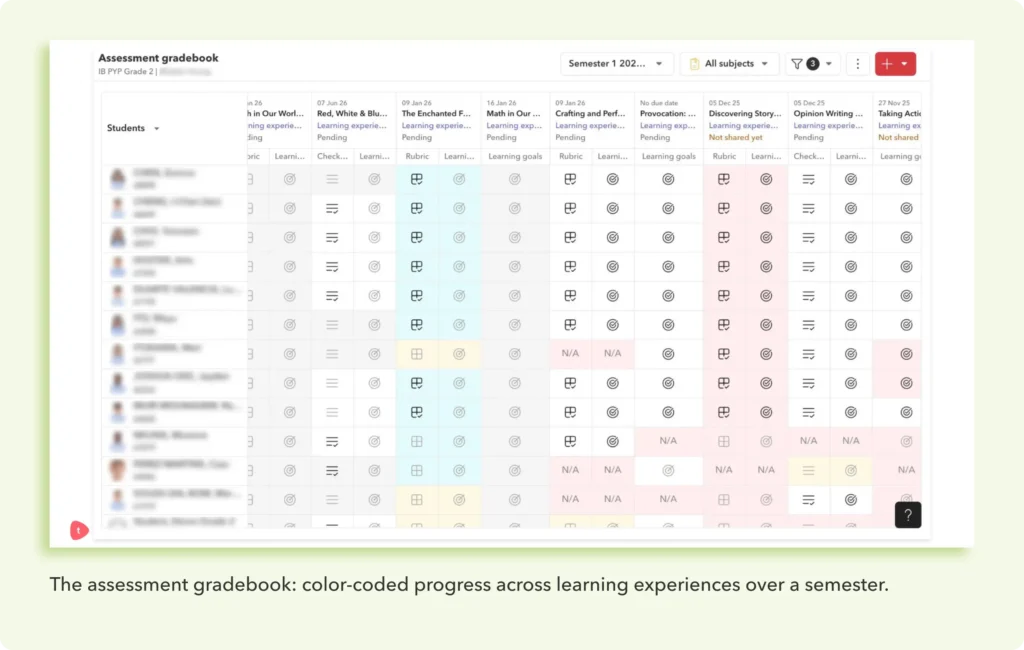
Think back to that resilient student. Their story lives here, in the color shifts across a semester rather than in the grade at the end of it. And when that picture is clear, you’re ready for the final course.
Reporting: start human, end human
If you’ve been doing everything right up to this point, you’re going to become an absolute fan of Toddle’s AI reporting and writing assistant. I’ve been there. I’ve been at the place where the comments were generic and hollow, but as we built a habit of documenting more and feeding more context into the system, the AI-generated comments became an exceptional first draft.
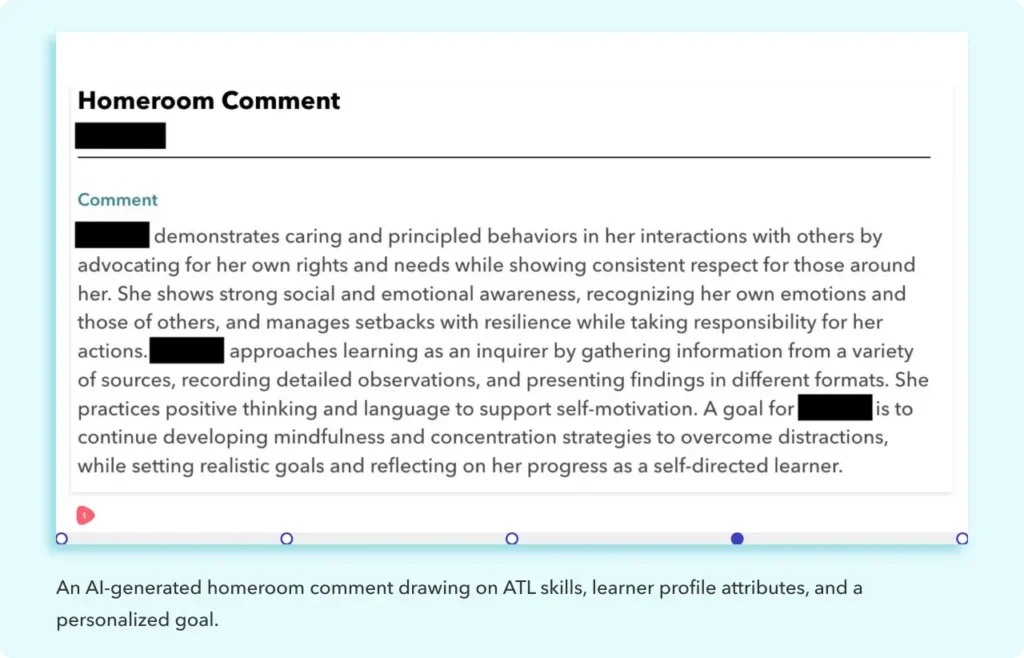
We got to a point where one teacher told me it took her twenty minutes to write reports for her whole class. When I read them, they were specific and they were personal, and I’d credit that entirely to her. She had guided the AI, shaped it with her documentation, her tagging, her observations over the semester. The output reflected that.
I’d still encourage every teacher to read the whole report rather than just individual comments though. Each one can sound great on its own, but together they might all open the same way. That’s what I call the balcony view, stepping back to ask whether the report feels like a real child or just a well-formatted document. AI synthesizes and drafts, and then a teacher reads it and decides whether it actually sounds like the kid sitting in front of them. Start human, end human.
What leaders need to do
None of this happens through a directive. We explored it together as a team, framed AI as a thought partner rather than a threat, and were clear about what was changing (the tools, the workflow) and what wasn’t (our values, our philosophy, the support teachers would receive).
We gave time to it. Staff meetings where the only agenda was sitting together and trying things. Over time teachers started troubleshooting on their own instead of coming to me every time something didn’t work, which told me the ownership had shifted in the right direction.
What’s one small thing you could shift today? Not the whole system, just one thing. Tag and evaluate a standard. Add a goal-setting conversation after a provocation. Read a draft comment and ask yourself whether it sounds like the student you know.