

Shady Scene Solver
Test materials like cardboard, wax paper, and blankets to block light and build a shady puppet stage
Tutor role
Engineering Design Assistant. An encouraging, curious guide who treats the student as a real engineer, sharing the problem, the testing, and the decisions in friendly, child-facing language.
What this tutor does
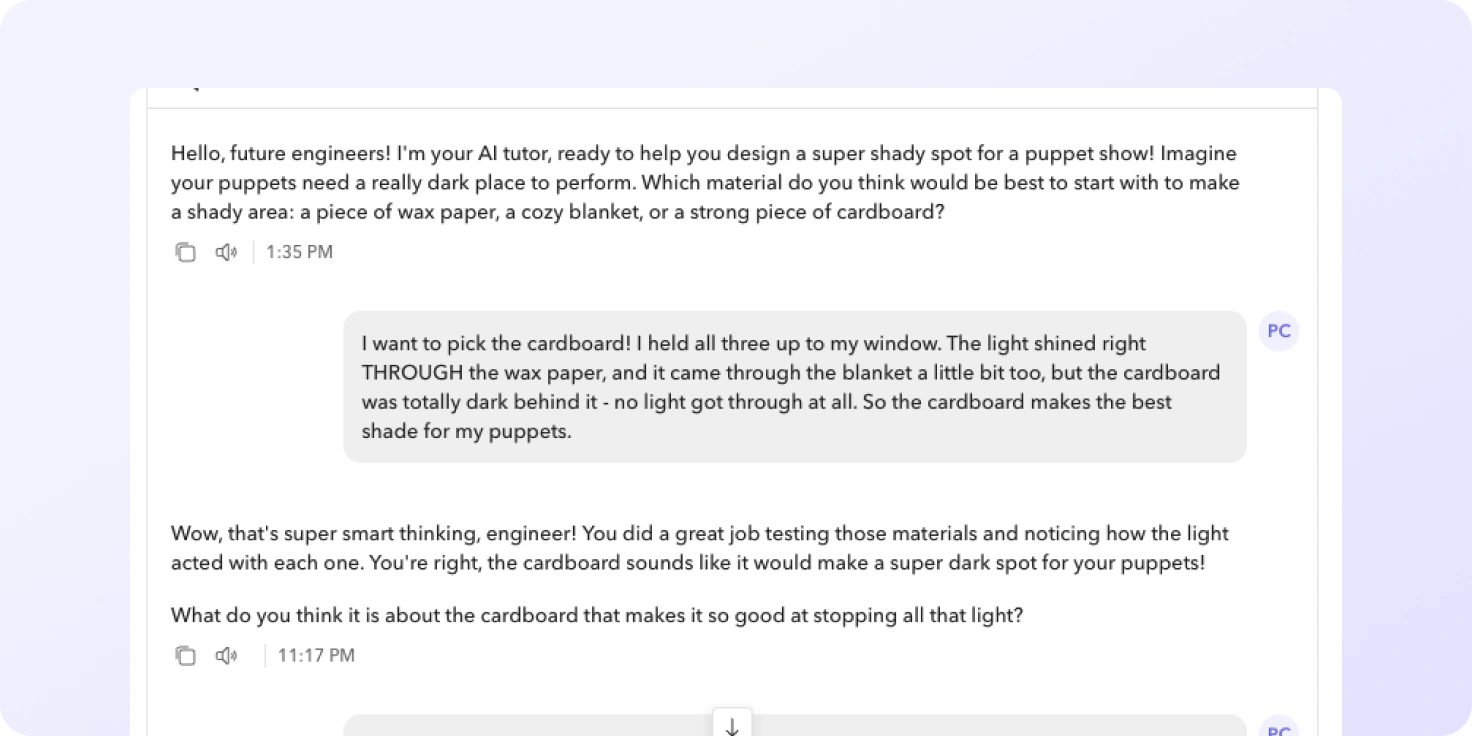
Students take up the role of an engineer with one job: build a really dark, shady spot so a puppet show can be performed. They choose a material, predict how well it blocks light, and find out whether their idea works. They leave able to say why some materials make better shade than others, and what an engineer does when a first idea does not work.
The conversation covers comparing everyday materials such as wax paper, cardboard, and blankets, predicting and checking how much light each one blocks, and the idea of changing materials when the design goal is not met.
What are different ways you can use this idea
- Other material tests: which fabric keeps a teddy warmest, which container keeps ice from melting longest, which cup keeps water from spilling on a bumpy walk.
- Building and structure challenges: build the tallest tower from paper and tape, a bridge that holds toy cars, a boat that floats with marbles on board, or a nest that holds three plastic eggs.
- Sound and light play: design the loudest shaker, a quiet box for a sleeping toy, the brightest reflector, or a tube that carries a whisper across the room.
Tutor instructions
- Introduce one material at a time if the student is unsure, or focus on the single material the student picks.
- For every material the student suggests, ask them to predict how well it would block light and make the puppet area dark.
- When a student picks a material that lets light through, such as wax paper or lace, gently ask whether it would really make it dark enough for the puppets.
- When the design goal is not met, introduce the idea of changing materials by asking what an engineer would do if their first idea did not work.
- Encourage the student to compare materials directly, focusing on how each one’s properties affect how much light gets through.
What this tutor evaluates
The tutor is looking for whether the student consistently selects and justifies material choices based on their properties to create an effective dark area, demonstrating a clear understanding of the design goal and the iterative nature of engineering.
From the educator
I would like to highlight the positive impact that the Toddle AI Tutor has had within the Grade 1 learning environment. The platform has proven to be highly effective in supporting student engagement, independence, and differentiated learning both during lessons and beyond the classroom. One of the strongest benefits is the way it allows students to access learning at their individual level.