
Before school, he was already hours into his day. He woke at four each morning to take his family’s cattle out to graze. Once they were settled, there was more work to do: his mother prepared things for him to sell, and he went out to sell them. Only after that did he put on his uniform and head to school. By the time he arrived in class, he had already spent hours carrying responsibilities that most school applications would never ask about.
Uzo Agyare-Kumi, Dean of African Leadership Academy (ALA), told me about this young man while describing the life he was leading before he applied to ALA. On paper, his application had few clubs, competitions or formal leadership positions to list. But in the life behind the application, she saw responsibility, endurance and initiative.
“Leadership can look quiet,” Dean Uzo said.
ALA was built to recognise young people like him: students whose potential is often more visible in the lives they already lead than in the opportunities they have been given.

African Leadership Academy opened in Johannesburg in 2008 with a focused mission: to identify and develop the next generation of leaders for the African continent. Each year, it brings together young people from across Africa for a two-year residential programme during the final years of secondary school. Since opening, more than 1,860 students from 47 African countries have studied there.
The school’s founders, Fred Swaniker and Chris Bradford, believed that Africa’s future would depend in large part on the quality of its leaders. So they designed a school around that belief. It influenced who ALA would admit, what students would study, how they would live together, the responsibilities they would take on and the relationship the school would maintain with them after graduation.
Finding leadership
ALA looks for academic readiness, but it is also looking for qualities that are harder to measure: curiosity, initiative, resilience and what Dean Uzo calls moral imagination. These do not always arrive neatly packaged in an application. They might show up in a student caring for younger siblings, earning money for the family before school, starting again after failure or stepping up when nobody has formally asked them to.
“We are not looking for the brightest and the shiniest. We are not looking for the loudest,” Dean Uzo said.
That changes not only how ALA selects students, but where it goes looking for them. Students hear about the school through schools, churches, youth organisations, parent chapters and alumni. Current students sometimes return home to run one- or two-day leadership accelerators. That network matters because the young person ALA is looking for may not yet see themselves in the language of highly selective schools.
ALA admits about four per cent of applicants, and 95 per cent of students receive financial aid. But its admissions philosophy asks a more interesting question than selectivity alone can capture: what has this young person done with the circumstances and opportunities actually available to them?
Finding potential in context is the first part of the model. The harder question comes next: once you have found it, how do you develop it?
Leadership as a curriculum
ALA’s students prepare for Cambridge AS and A Level examinations. Alongside these, every student completes ALA’s own core in African Studies, Writing and Rhetoric, and Entrepreneurial Leadership.
The Cambridge subjects help open doors to university. ALA’s own curriculum is concerned with the person who will walk through them.
“Your school must be designed around a clear belief about the kind of human beings you are trying to form,” Dean Uzo said.
At ALA, that belief creates a progression. Students begin by asking who they are and where they come from. They learn to understand a continent larger than their own experience of it, to form an argument and defend it, and eventually to turn ideas into action. Along the way, they have to work with other people, make decisions under pressure and become accountable for what happens next.
Leadership, then, is not treated as a position held by a handful of students alongside the academic programme. It is something every student is expected to learn and practise.
Start with identity
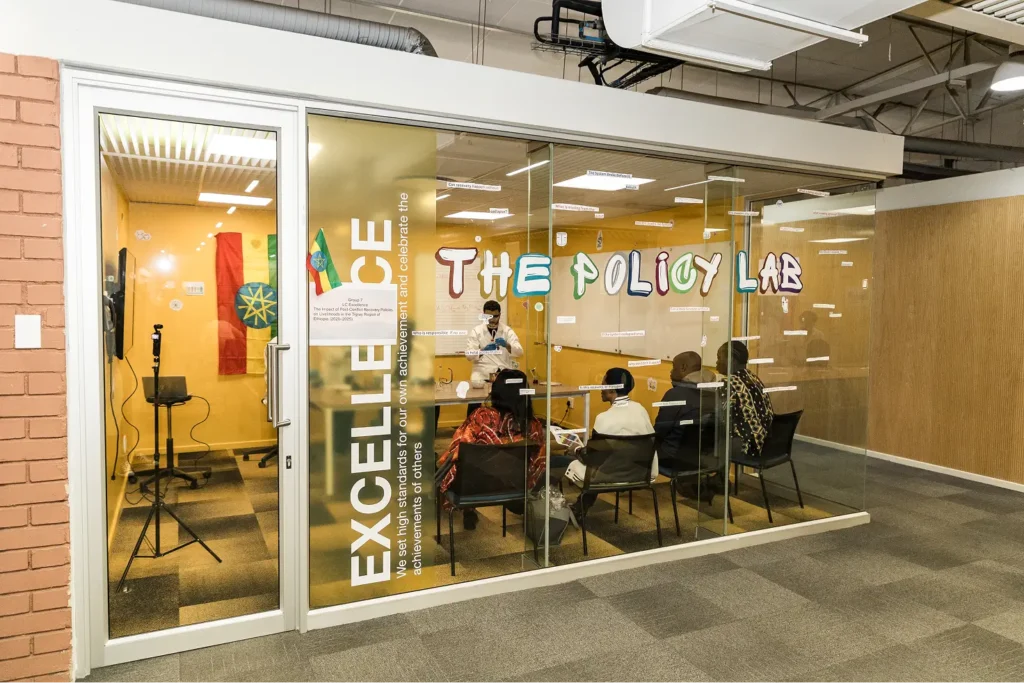
One of the first questions students encounter at ALA is Omang. In Setswana, it means: Who are you?
Students spend a term exploring that question across African Studies, Writing and Rhetoric, and Entrepreneurial Leadership. They do not only discuss identity in the abstract. In one iteration, students were asked to identify a need connected to identity and design an educational game that would help somebody else explore it. One class created Afroball and tested it on the sports field; others adapted familiar formats such as charades, UNO, and snakes and ladders. The work asked students to move between personal reflection, research, design and the experience of another player.
In a residential school filled with teenagers from across the continent, the question of identity does not stay in the classroom for long. African Studies widens the frame as students study histories, politics, economies and contemporary questions beyond their own countries.
Dean Uzo described its underlying question this way: Where do I come from, and how do I understand the continent I am called to serve? Before students are asked to lead within Africa, they are asked to know more of it.
Writing and Rhetoric adds another layer: the ability to make sense of what they are learning and communicate it responsibly. For the Year 1 Africa Day capstone, students research continental issues and produce policy briefs that they present to Year 2 students and teachers. A claim has to survive more than the page. Students must explain it, defend it aloud and reconsider it when somebody else’s question exposes a weakness.
By the end of the first year, students have moved from examining their own identity to developing a point of view about the continent around them and learning to defend it.
From argument to action
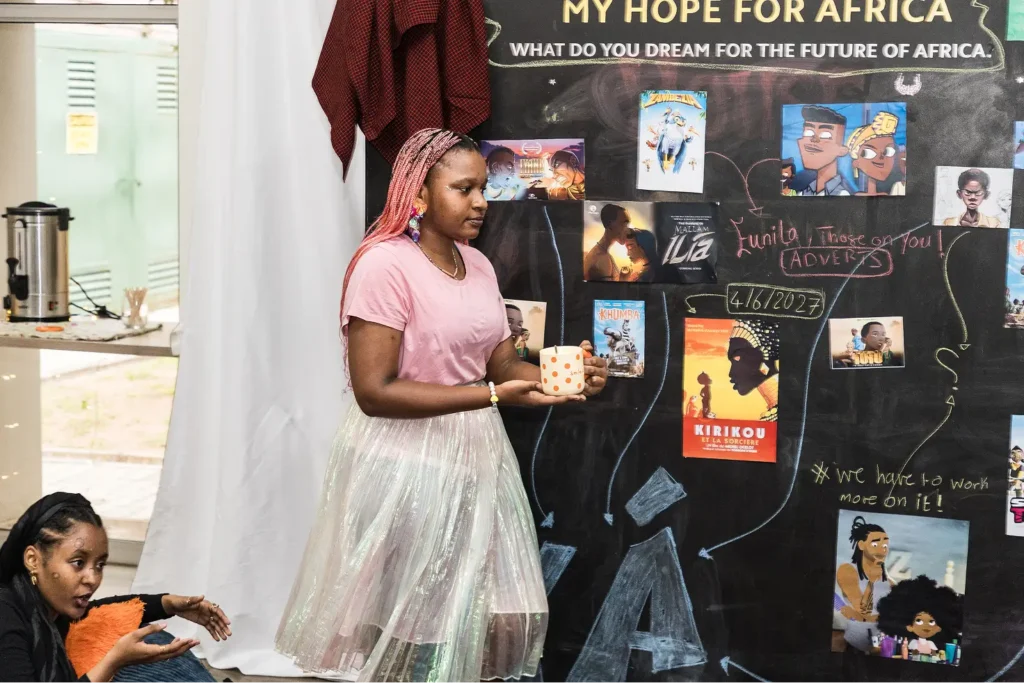
Entrepreneurial Leadership takes students a step further. In the Original Idea for Development incubator, teams spend six weeks using human-centred design to develop responses to pan-African challenges. The strongest ideas are presented at E-Fest to the ALA community and a panel of external judges. Some continue into the second-year Student Enterprise programme, where students run ventures with executive teams and report to boards that include working professionals.
The problems they take on are concrete. At E-Fest 2025, one team proposed monthly DIY Build Boxes to bring hands-on STEM, arts and entrepreneurship into homes. Another designed a solar-powered cold-chain system for vaccines and blood products in off-grid health centres. Other teams worked on period pain, household food security and culturally relevant nutrition.
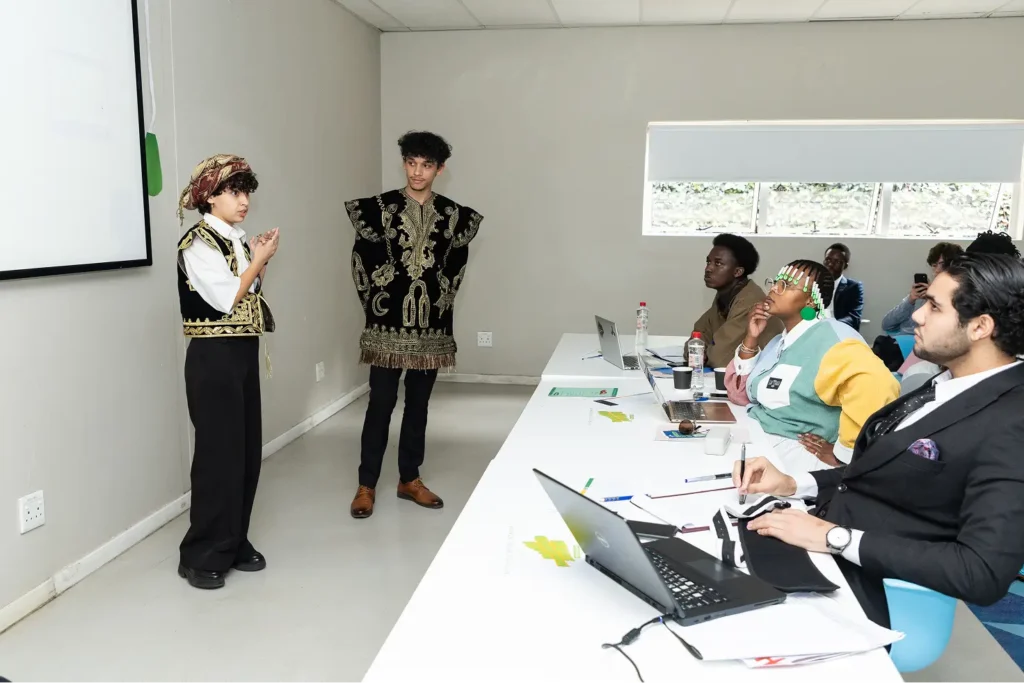
The goal is not to turn every graduate into an entrepreneur. It is to teach students how to move from recognising a problem to doing something about it. They have to understand who experiences the problem, test an idea, work out what resources it will require, persuade other people to join them and respond when the first idea does not work.
This is why entrepreneurship sits at the centre of ALA’s approach to leadership. Students are not rewarded simply for noticing that something is wrong. They are expected to take an idea far enough to discover what it actually takes to make something happen.
The curriculum continues in the residence
Every student at ALA lives on campus. Most share a room with someone from another country and, where possible, another religious background. Each belongs to a residence hall of around 20 students and an advisory family led by a member of staff.
The advisory is more than an administrative grouping. Families meet for an hour each week to talk about how students are doing, the challenges they are facing and life on campus. Advisors also check in with students individually. In the residence halls, hall heads hold weekly meetings, build traditions and help create the support structures students need while living far from home. Birthday celebrations and hall chants sit alongside harder conversations about wellbeing, conflict and belonging.
There are evening study sessions, campus jobs and trips. And there are the smaller negotiations that come with living together: whose turn it is to clean, what happens after an argument, how to live beside a belief you do not share, and when to reconsider a judgement you formed too quickly.
“Curriculum is not just made of subjects,” Dean Uzo said. “It is culture, community, routines, and relationships.”
The diversity of ALA’s cohort creates the possibility of learning from differences. Residential life makes those differences part of everyday life. Someone from another country or faith is not simply a perspective you encounter in a classroom. They may be the person sleeping in the bed next to yours.
Learning to lead across differences
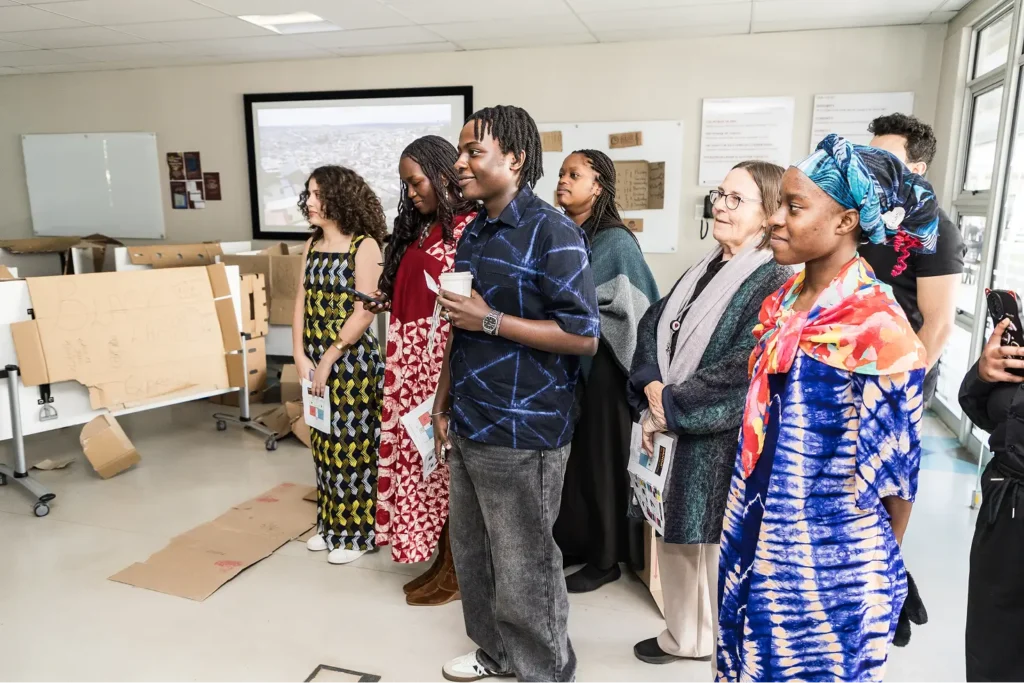
Living with differences is one thing. Learning to navigate them when interests and priorities compete is another. At ALA, students get to practise this through the African Leadership Academy Model African Union, known as ALAMAU. The annual student-led conference simulates the work of the African Union. Delegates represent countries other than their own, debate continental issues, negotiate across committees and draft resolutions together.
The conference is the visible event. But much of the learning happens in preparing students to participate in it well.
In one introductory exercise for the 2025–26 International Relations Council class, students were given fictional island nations and confronted with three crises. A crop disease caused food shortages. A storm damaged the energy grid. A dispute at sea threatened the border.
Students playing presidents, ministers and advisors had to decide what their country would do. Two representatives could leave the room to negotiate with other nations. Everyone else had to stay behind, receive diplomats and protect their country’s position.
The simulation lasts a class. But students spend much longer learning what it takes to negotiate well.
For her final project, Zimbabwean student Anotidaishe Chinyadza wrote the strongest Model African Union faculty guide submitted that year. The 34-page guide takes teachers through research, national profiles, opening speeches, diplomatic language, coalition-building, amendments, voting and misinformation, with lessons and simulations to help prepare first-time delegates.
Anotidaishe is now part of the delegate-preparation team for ALAMAU 2026, the conference’s 13th edition. What began as a student assignment now helps prepare the next group of delegates.
School continues after graduation
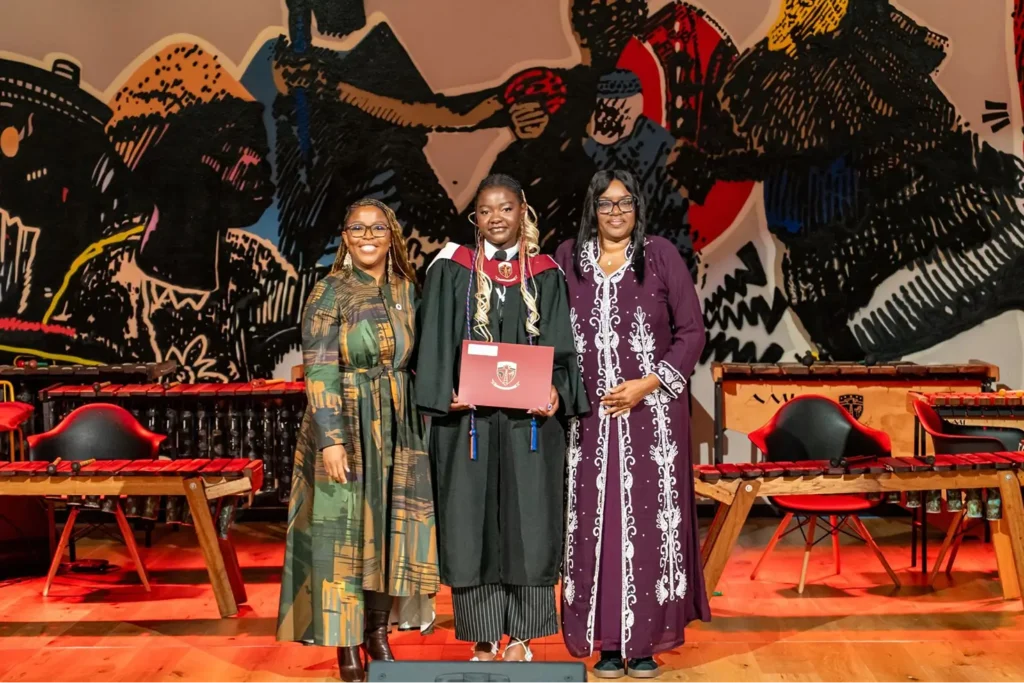
ALA’s approach to developing leaders does not end when students leave Johannesburg. Through its wider network and the Africa Careers Network, the school continues to support graduates as they move through university, internships, early careers and, for some, their own ventures.
“You cannot do that if your school ends after high school,” Dean Uzo said.
The paths alumni take are strikingly varied. Eswatini alumnus Nhlanhla Mavuso went on to found Fluid Silicon, which works on the reliability and energy efficiency of computing hardware. Egyptian alumna Rawan Elshobaky is pursuing doctoral research in human medical genetics and genomics, including how disease-risk tools can better serve populations underrepresented in genetic research. Tanzanian alumnus Emmanuel Samwel founded Primetel Health to extend healthcare into underserved communities.
No school can claim sole credit for what a person goes on to build years after leaving it. ALA makes a different promise: to remain close enough to help. Its alumni have started hundreds of ventures, and the Africa Careers Network places hundreds of young people in jobs and internships each year.
The two years in Johannesburg are therefore not the whole model. They are the most intensive part of a much longer relationship.
What other schools can take from ALA
ALA’s model cannot simply be transplanted into another school. It is shaped by a selective, residential, pan-African setting and a mission explicitly tied to the continent’s future. But there are ideas underneath its design that travel well.
Look for leadership in more places
ALA’s admissions philosophy offers perhaps the simplest lesson. Leadership does not always arrive with a title, a competition win or a list of extracurricular activities. It can show up in the responsibilities a young person takes on at home, the initiative they demonstrate when opportunities are limited or the way they respond when things go wrong. Looking for potential in context can reveal strengths that conventional measures of achievement miss.
Give leadership a progression
Many schools give students opportunities to lead. ALA goes further by thinking deliberately about how those opportunities build on one another. Students begin with identity, widen their understanding of the continent around them, learn to form and defend ideas, turn those ideas into action, live across differences and navigate situations where interests and priorities compete.
The useful question for other schools is not simply whether students have opportunities to lead, but whether what is being asked of them becomes more demanding as they grow.
Build around the mission
Perhaps the most distinctive thing about ALA is how far its mission reaches. Its commitment to identifying and developing young leaders influences where it recruits, how it reads an application, what every student studies, who students live alongside, what responsibilities they are trusted with and why the institution remains involved after graduation.
A mission becomes meaningful when it changes the decisions a school makes.
The young man who woke at four to herd cattle may not have looked like a conventional leadership candidate on paper. ALA read his morning differently.
That is where its model begins: with a broader idea of what leadership can look like. The curriculum, the residence, the enterprises, the negotiations and the network are all designed to develop the potential the school has learned to see.
At ALA, leadership does not begin when someone gives you a title. It begins much earlier.