Celeste Bolin, Executive Director of One Stone Lab School in Boise, Idaho, was finalizing her role when the conversation turned to compensation. Across the table sat a 17-year-old student asking detailed questions about nonprofit benchmarking, sustainability, and organizational philosophy. The student was not observing. She was the chairman of the One Stone Board of Directors. When Celeste took the role, that student’s vote, along with 10 others, helped determine her hiring and compensation.
At One Stone, students hold a two-thirds supermajority of voting seats on the board. They approve executive hires, set performance goals, review budgets, and shape long-term strategy. “Most schools talk about preparing students for leadership,” Celeste told me. “We decided to let them actually lead.” The structure was not added later. It was written into the bylaws of the One Stone nonprofit organization in 2008, before the school was launched in 2016.
Governance before the school opened
One Stone began in 2008 with an after-school flagship program called Project Good, where students worked on real community challenges. From the outset, the organization was structured with a student-majority board. The founders believed that if students were capable of meaningful work in the community, they were capable of governing the nonprofit itself.
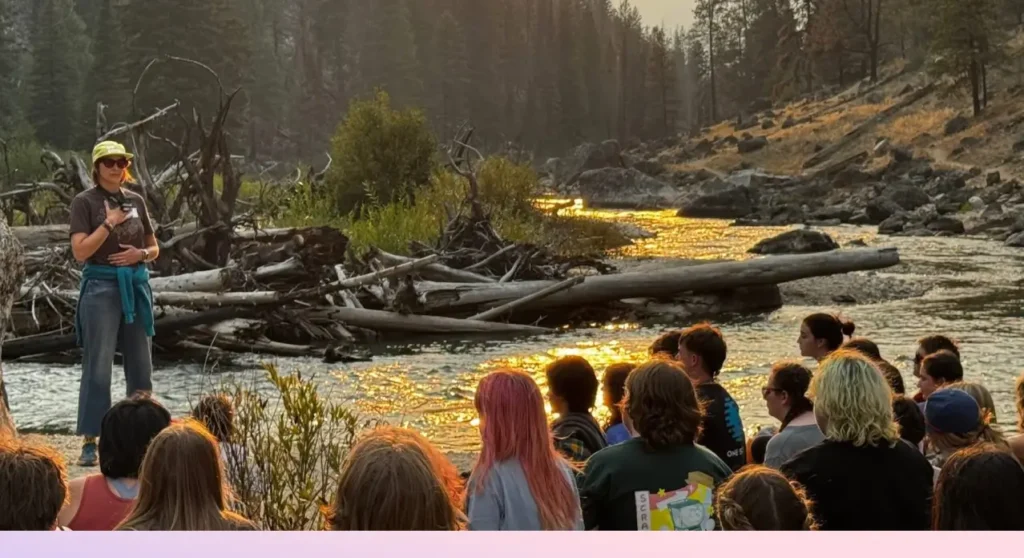
When One Stone opened as a full high school in 2016, the governance model did not change. The bylaws required that at least two-thirds of voting directors be high school students, and all Officer roles were held by students. The authority was formal and legal, not advisory. This decision shaped everything that followed. Student leadership was not a program. It was institutional design.
From One Stone’s Bylaws:
“Each Committee of the Board shall consist of two (2) or more directors; provided, however, that high school students shall serve as officers and shall comprise at least two-thirds of the total number of members.”
“We weren’t interested in symbolic participation,” Celeste says. “If we actually believed teenagers were capable of the kind of work we were seeing them do, we had to give them the authority to make real decisions. Including decisions about us.”
The tuition decision
In 2022, the board faced a difficult question. Since its founding, One Stone had operated tuition-free, supported largely through philanthropy and grants. The financial model was becoming increasingly fragile. Adult leadership brought the issue to the board: should the school begin charging tuition?
Many of the students voting were themselves enrolled at the school. They were not discussing an abstract policy change. They were deciding whether their own families would pay. The conversation did not resolve in a single meeting. Over multiple sessions, the board reviewed financial projections, enrollment patterns, fundraising forecasts, and long-term sustainability models. Students asked for more data. They requested comparisons with similar schools. They wanted to understand the downstream implications, not just whether tuition was necessary, but what it would signal about the school’s identity.
One of the hardest questions raised in those meetings was not financial. It was philosophical. If accessibility was foundational to One Stone’s mission, would charging tuition undermine that commitment? Several student board members expressed concern that the school could unintentionally narrow who felt welcome. The board debated whether maintaining a tuition-free model at the cost of long-term instability was more responsible than introducing tuition with structural safeguards. Eventually, after weeks of analysis and discussion, the board voted to implement tuition.
But the vote was not the final act. Students then led the design of an income-based Family Individualized Tuition scale to preserve access and equity. They examined income brackets, modeled tier scenarios, and selected a third-party platform to allow families to submit financial information confidentially. When Idaho later introduced the Parental Choice Tax Credit, the board reconvened to assess whether and how their tier structure should adapt.
The significance was not that students made a bold decision. It is that they owned the trade-offs. They were not shielded from complexity. They confronted it and navigated it.
When students and adults disagree
There have been moments when student board members advocated for changes that adult leaders believed were impractical. In most institutions, experience would end the debate. At One Stone, that is not how governance works. If adults disagree, they must present evidence and make their case. Students are expected to engage seriously with those arguments. Sometimes students change their position. Sometimes adults do. The structure does not privilege age or previous experience as the deciding factor.
Learning to govern
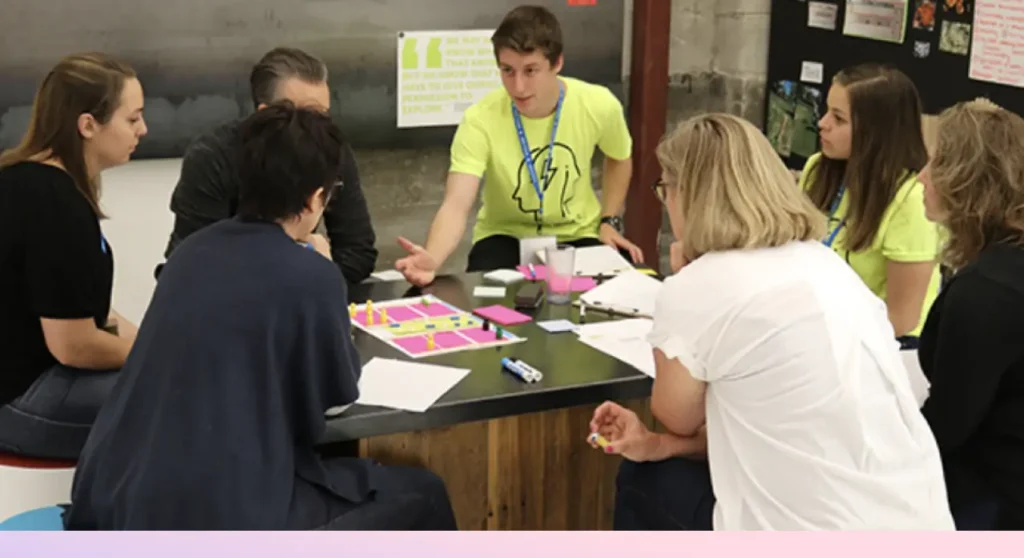
New student board members participate in onboarding sessions where they learn how meetings are structured, how committees operate, and what fiduciary responsibility entails. They review financial documents and discuss confidentiality expectations. Adults provide coaching and context.
Mackenzie King joined the board in her second year of One Stone and now serves as chair in her final year. She described her early experience as uncertain rather than confident. Over time, familiarity replaced hesitation. She learned how to read financial reports, how to weigh trade-offs, and how to guide discussion toward decisions. The competence developed through participation, not prior expertise.
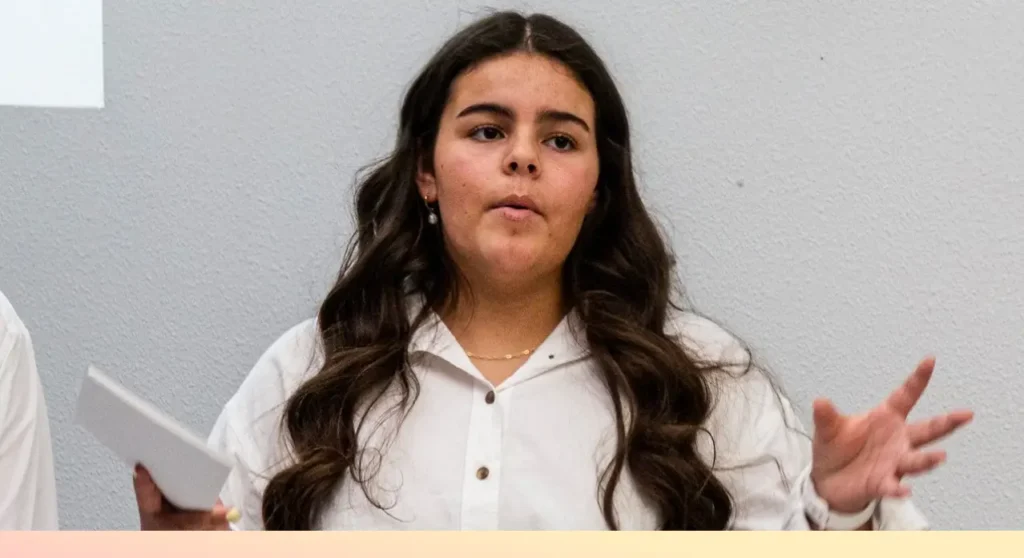
The school’s small size reinforces accountability. With approximately ninety students enrolled, board decisions affect a community that members see daily. There is little room for abstraction.
What governance teaches
Student-majority governance functions as practical civic education. Students encounter the mechanics of institutional life: budget constraints, strategic trade-offs, policy implications, and the limits of idealism. They see how decisions unfold over time and how implementation often requires revision. In many schools, governance is discussed as theory. At One Stone, it is practiced. Students learn that institutions are shaped through deliberation and compromise, not through unilateral action.
“Most civic education teaches students how government is supposed to work in theory,” Celeste said. “We teach students how governance actually works by making them responsible for governing something real.”
Governance within a broader model
Governance at One Stone does not sit in isolation. The school does not use traditional grades or GPAs. Instead, students graduate with what the school calls a Growth Transcript, a competency-based framework that measures development across domains such as mindset, creativity, knowledge, and skills. Progress is defined by demonstrated capability rather than accumulated seat time.
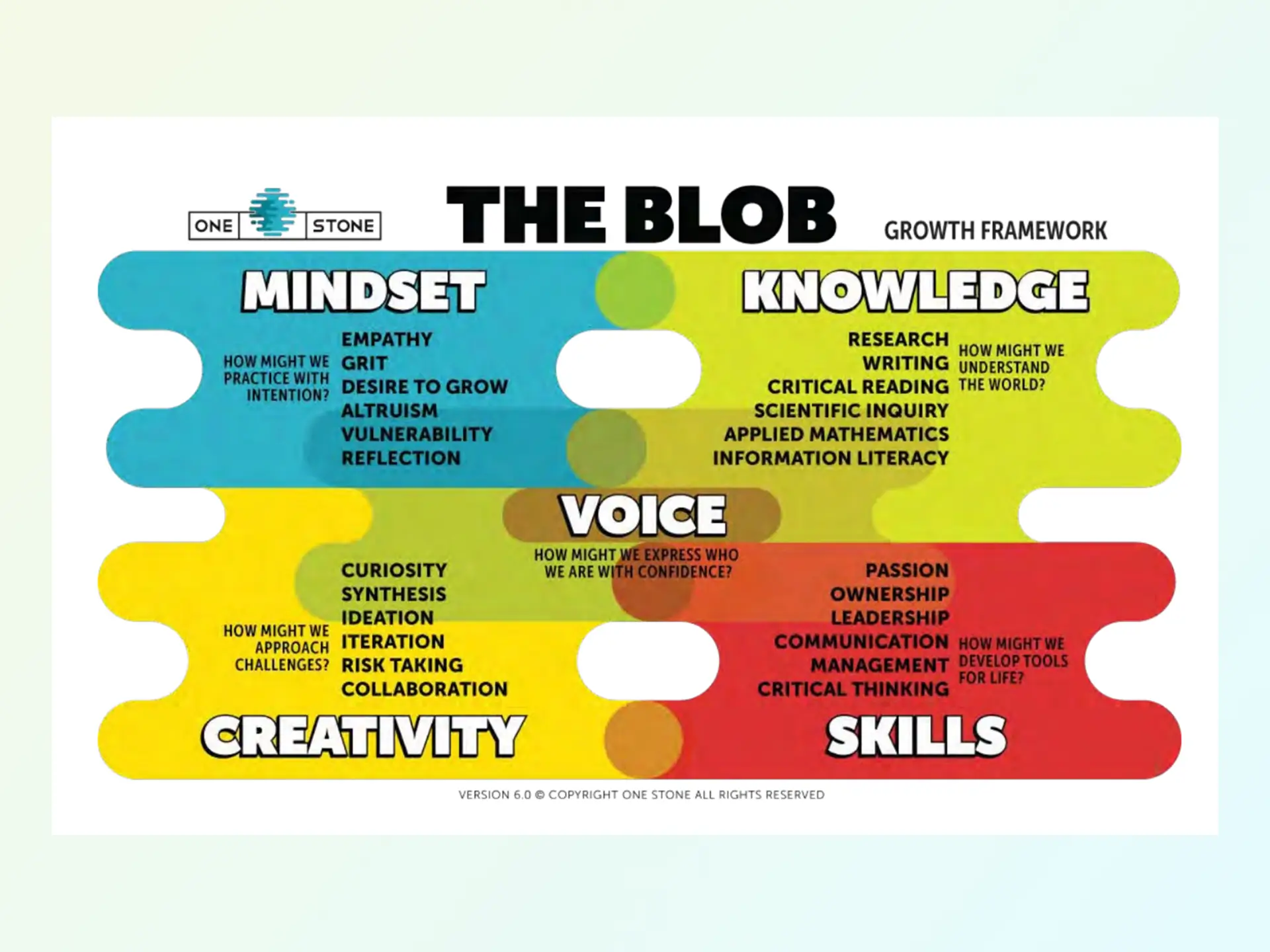
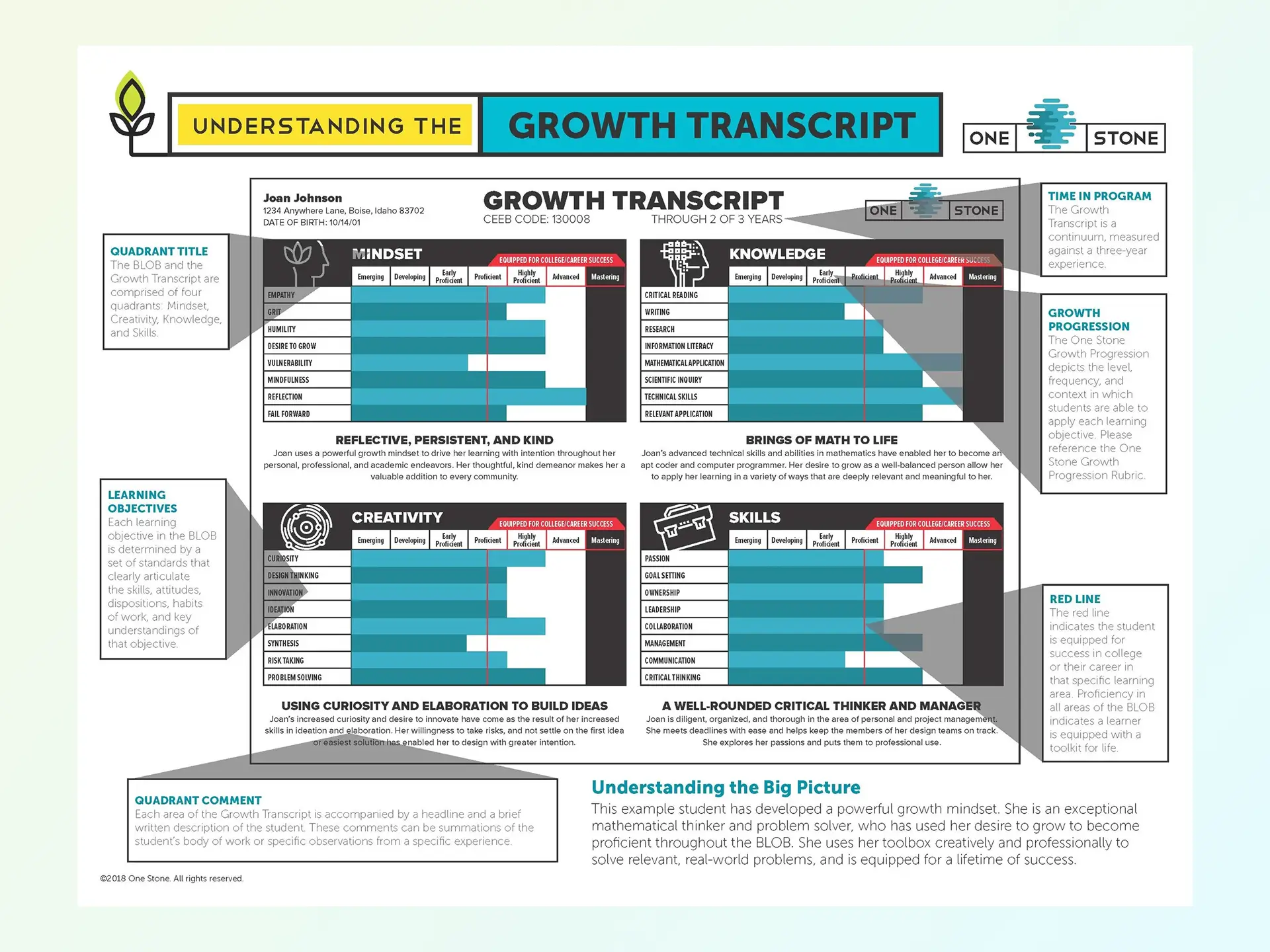
The Growth Transcript organizes development into competencies such as critical thinking, applied mathematics, collaboration, empathy, iteration, and leadership. Students progress through levels of mastery, culminating in what the school calls “Actualizing”, a threshold aligned with college and career readiness. This reporting framework matters because it mirrors the governance structure. A student participating in a budget review is not merely observing adult decision-making. They are applying financial reasoning, ethical judgment, systems thinking, and communication skills in a live institutional context. A student questioning a strategic initiative is demonstrating precisely the kinds of competencies the school claims to cultivate.
The authority students exercise on the board is not extracurricular. It is an extension of the school’s academic philosophy. If learning is competency-based, and competencies develop through authentic application, then governance becomes one of the most rigorous learning experiences available. The Growth Transcript and the board structure reflect the same institutional belief: competence is built through real-world, personalized application. Protection delays growth. Responsibility accelerates it.
After graduation
When the first graduating class left One Stone in 2019, the school wondered: how would they do in traditional college settings after four years without grades or traditional evaluation? They crushed it. The outcomes have been consistent: many students maintain GPAs above 3.5, significantly above the national average in the USA. Many go on to graduate programs and PhDs and several have become entrepreneurs.
But the more telling data is behavioral, not academic. Alumni describe an immediate confidence navigating institutional systems: talking to professors, pushing back on what isn’t working, evaluating options rather than deferring automatically. One alumna, Elise Batten, spoke at a recent One Stone fundraiser about completely changing her major midway through her undergraduate degree, a pivot that leaves many students feeling derailed and behind. She told the audience she didn’t find it scary. She’d spent four years doing things like voting on whether her own school should charge tuition. Changing a major felt manageable by comparison.
What makes adults hesitate
For many school leaders reading this, the instinctive reaction is not admiration but concern. There are legitimate questions. What about legal liability? What about confidentiality? What about the uneven maturity levels among teenagers? What if a student makes a reckless decision? What if governance becomes unstable?
One Stone does not dismiss these concerns. Student board members undergo onboarding that includes fiduciary responsibility, confidentiality expectations, and governance norms. Adults remain present in every discussion. The board operates within clear legal and structural boundaries. Authority is not unbounded; it is defined.
More importantly, the school distinguishes between immaturity and inexperience. Inexperience can be addressed through coaching and structure. Immaturity often diminishes when responsibility is real. Celeste noted that when students know their vote carries weight, preparation deepens. The tone of meetings shifts. Students show up differently because the stakes are genuine.
There have been disagreements. There have been proposals that adults questioned. But the solution has not been to reclaim authority. It has been to elevate the level of argument. The hesitation many adults feel is understandable. Sharing authority is uncomfortable. It requires patience. It requires trust. It requires accepting that decisions may not always unfold as one would prefer.
The question is whether withholding authority produces stronger graduates or simply more compliant ones.
What other schools might consider
Few schools will replicate One Stone’s model in full. Its scale and nonprofit structure are specific. But the design question it raises is widely applicable: where, exactly, do students hold real authority in your institution?
In most schools, students already exercise leadership. Student councils plan events, represent peer concerns, and contribute to school culture. That work matters. But it typically operates at the level of school life rather than institutional direction. At One Stone, students’ authority extends into the governance of the school itself. They vote on budgets, hiring, compensation, and long-term strategy.
For schools operating within traditional constraints, the shift does not need to be structural or dramatic. Students could hold voting seats on board committees rather than observer roles. “Parents and other non-board members serve on committees all the time,” Celeste notes. “There’s no barrier to that.” Students could be invited to open board meetings. And the change need not start with governance at all. “Even that simple practice of asking students what they’re interested in has huge psychological and cultural impacts on your school.”
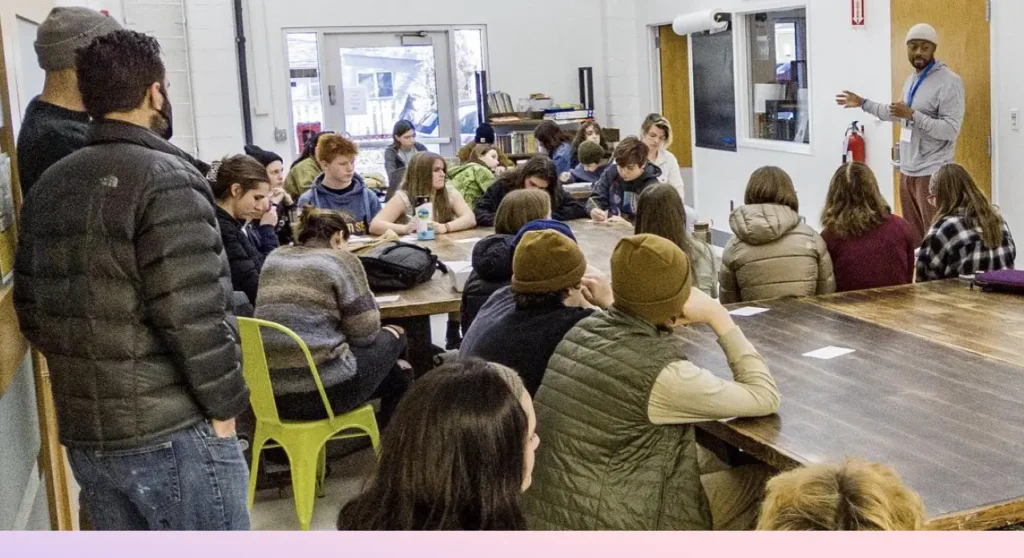
When students know their participation can influence outcomes, the level of preparation changes. There are legitimate concerns about exposing students to financial complexity or sensitive decisions. One Stone addresses them through training, coaching, and clarity about scope. Authority is paired with support.
The broader question for school leaders is not whether students should run everything. It is whether the distribution of authority inside the school reflects the degree of agency the institution claims to cultivate.
The design choice
One Stone’s governance model reflects a specific institutional belief: that students are capable of more responsibility than most schools grant them, and that competence develops through use. The risk of this approach is visible. Decisions may be imperfect. The risk of the alternative is less visible: students graduate having never practiced the responsibilities they are said to be prepared for.
Each year, new students join the board. The bylaws remain unchanged. Adults argue their case when necessary. Students vote. The work continues. The question for other schools is not whether to replicate the structure, but whether their governance design aligns with the agency they claim to cultivate.