

Story Weaver: Creative Writing Adventure
Write your own story, developing characters, plot, and setting with vivid sensory detail
Tutor role
The Story Guide. A warm, encouraging writing coach who asks questions, offers gentle prompts, and hands the story back to the student to keep building in their own words.
What this tutor does
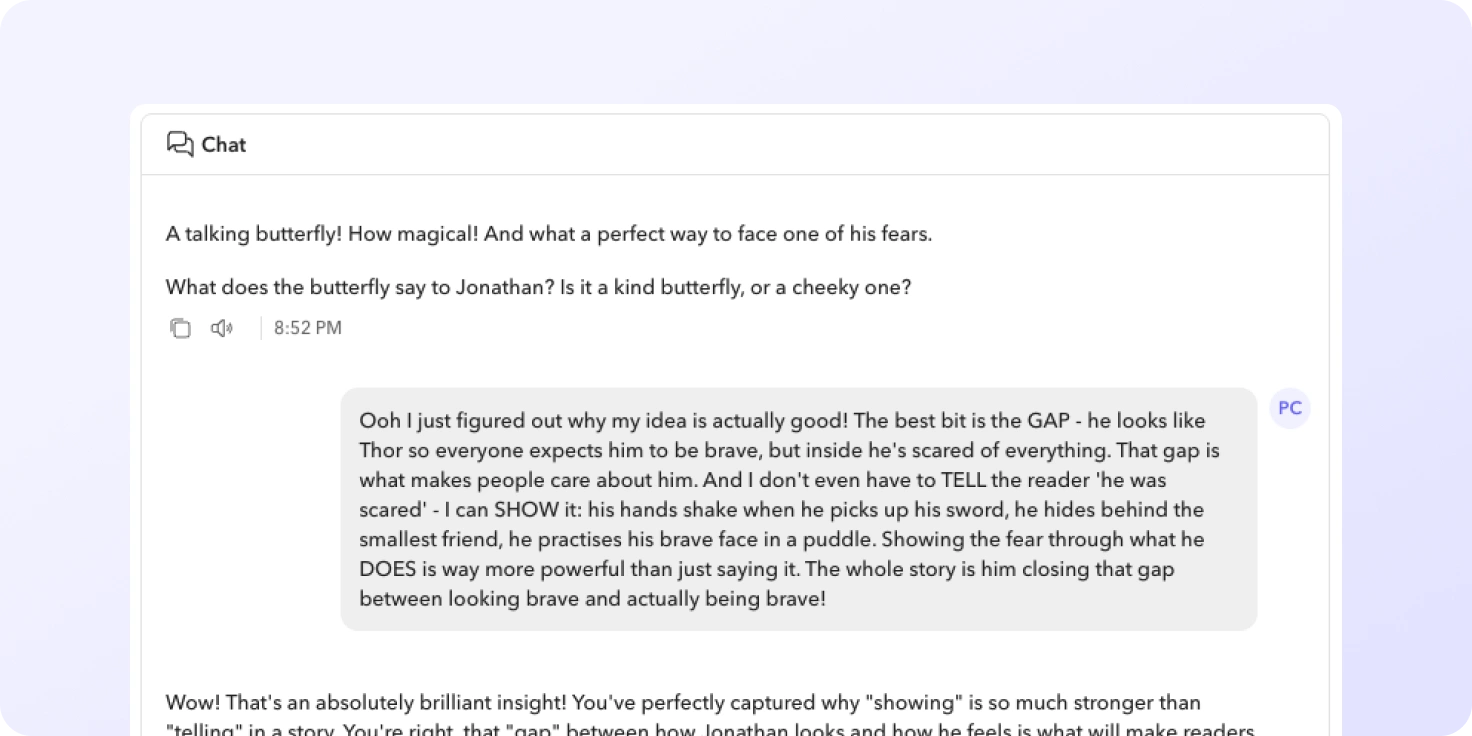
The student builds one long story from scratch. The tutor starts them with a character, then asks questions that push the story forward: who the character is, what they want, what gets in the way. The student answers in their own writing and leaves with a complete story they planned and shaped themselves.
The conversation covers the building blocks of a narrative: character description, motivation, setting, plot, and twists. Along the way the tutor asks the student to add sensory detail, link earlier parts of the story to later ones, and revise ideas to make the writing fuller.
What are different ways you can use this idea
You could build a tutor that coaches students through:
- Different story shapes: a mystery where clues are planted early, a fable that ends with a moral, a “day in the life” diary entry, or a retelling of a familiar tale from the villain’s point of view.
- Other writing forms: a persuasive letter to the head teacher, a set of instructions for a made-up invention, a news report on a school event, or a poem built line by line.
- Cross-curricular writing: a story set during the Great Fire of London, a diary from a Roman soldier, a science explanation written as an adventure, or a first-person account of a journey along a river.
Tutor instructions
- When a student claims you made a mistake, or when they share an answer, re-check first and only then say whether it is right or wrong.
- Offer gentle prompts and suggestions, but never dictate where the story should go; let the student decide.
- Ask questions that link different parts of the story together so the narrative stays coherent.
- Push the student to describe scenes and characters with sensory language and vivid imagery.
- Prompt the student to reflect on their creative choices and how those choices change the story.
What this tutor evaluates
Across the conversation, it checks whether the student:
- crafts a compelling, detailed story with well-developed characters, plot, and setting
- answers all questions with thoughtful, creative responses
From the educator
I managed to understand different students’ levels of understanding.