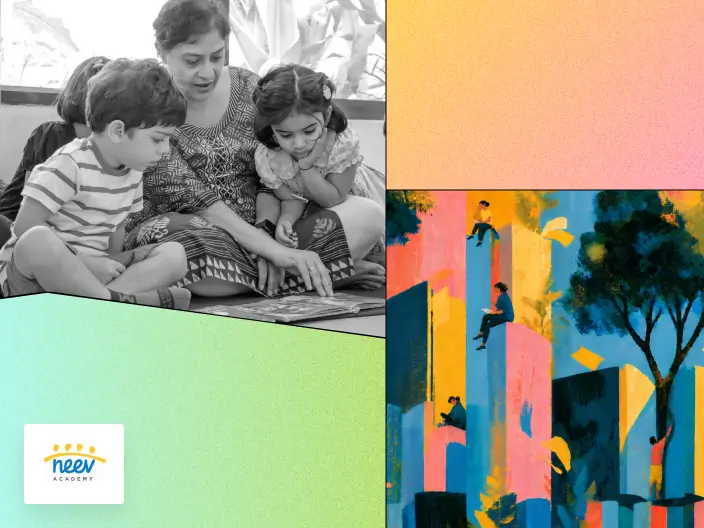
On a September weekend in Bengaluru, Neev Academy stops looking like a school and starts looking like a city built around children’s books. Authors move between packed rooms. Parents stand at book tables with armfuls of titles. Children drift from workshops to performances to conversations with writers. Older students manage crowds, recommend books, introduce speakers, and keep the whole thing running. Today, the Neev Literature Festival (NLF) has become India’s largest children’s literature festival.
But the more interesting part of the story is not what NLF has become. It is where it came from: a classroom that could not find the right book. In 2017, when Neev’s reading team wanted to teach partition literature to Grade 5 students, they could not find a single Indian children’s book on the subject. For a long time, Indian children had grown up reading stories that were windows into other cultures but rarely mirrors of their own. “The school needed books that affirmed Indian identity, and they barely existed,” Kavita Gupta Sabharwal said. So Neev asked itself three questions. How do we make reading cool? How do we find and celebrate Indian children’s books? And how do we build communities of readers?
The festival was the answer to all three. It made reading cool by turning it into a public event children wanted to be at. It found and celebrated Indian children’s books through the Neev Book Award. And it built a community of readers by bringing schools, authors, and families together on a single campus, free and open to anyone. What started in 2017 with twenty-two speakers now draws over 4,000 visitors across a single weekend. The Reading Challenge that grew out of it began with 37 schools. This year, 706 teams signed up from across India.
What sits behind it
Most schools wish children read more. Neev has done the hard work to make it happen. That shows up in time, staffing, and systems. Nine full-time staff run the reading programme, from planning lessons to sitting with individual students to deciding which books come into the school. Reading specialists track what students are drawn to, what they are avoiding, and where they are stuck. The library functions as a learning hub, not a period on the timetable. The reading staff also works with teachers, running book tastings and displays so that the books entering classrooms are ones teachers have read and chosen themselves.
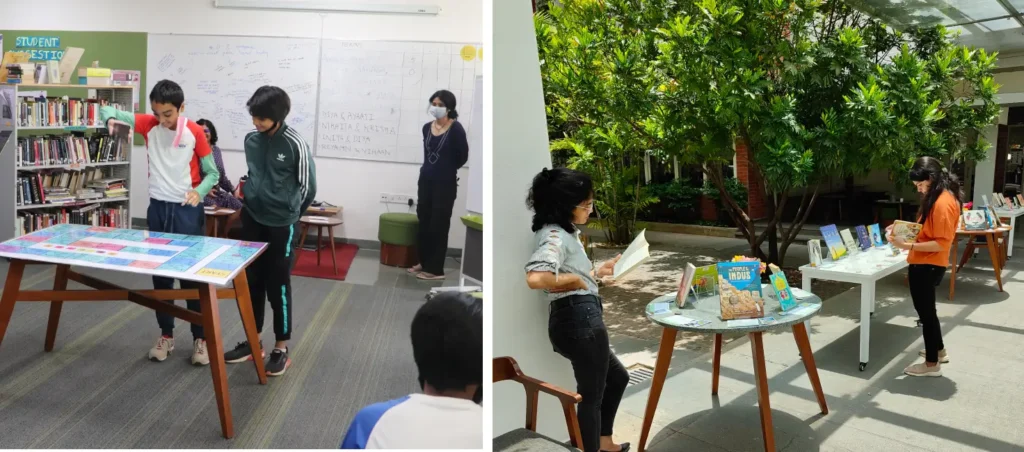
The programme is built around three goals: growing reading, information literacy, and critical thinking. Reading at Neev is not just about fluency or enjoying a good book. It is meant to build stamina, judgment, and the ability to sit with difficult ideas. None of this works if children are reading for a grade. When reading becomes something to be scored on, many children start performing instead of reading. “The moment you start grading children on reading,” Karthika says, “you lose the relationship the work is trying to build.”
There is no such thing as a non-reader
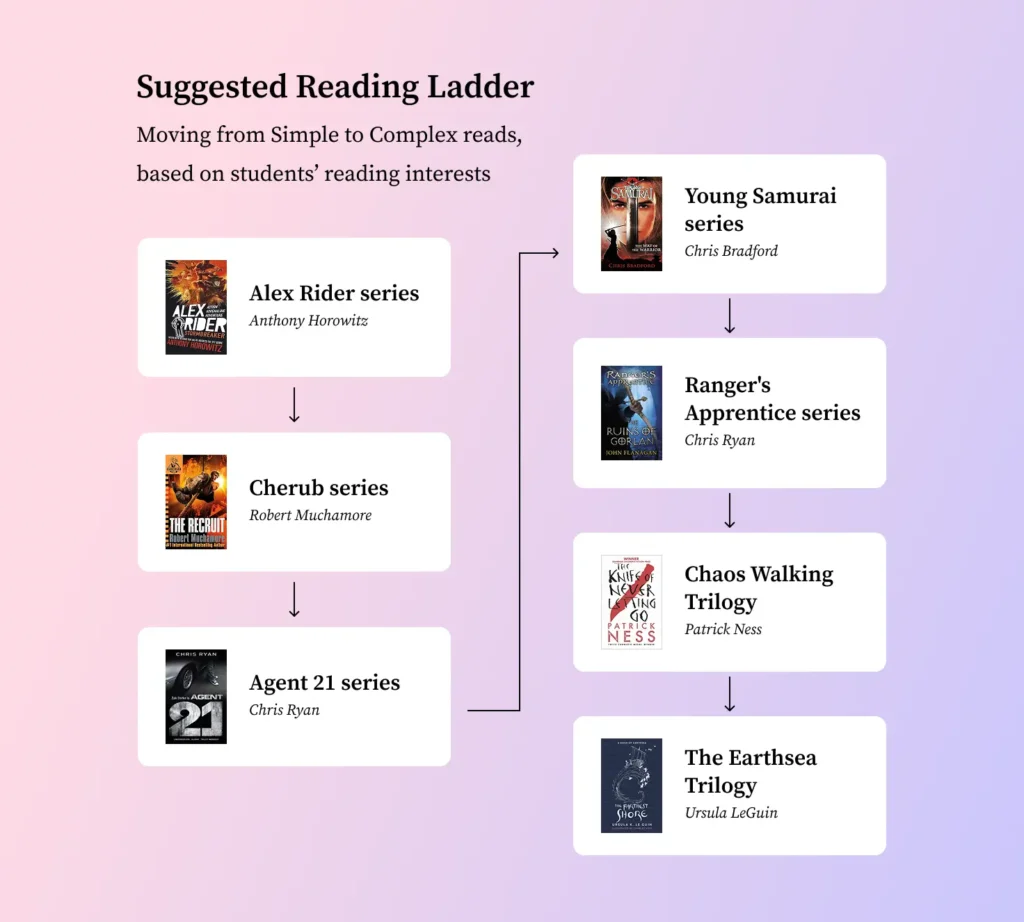
Neev is not trying to produce one kind of reader. It is trying to give different children different ways in, and then help them keep moving. The reading programme is designed around it. Reading ladders help students who like a particular genre move into harder texts. Summer reading lists are curated around themes and interests. In the primary years, novel studies are tied to units of inquiry, with every child given a copy of the book the class is working through. When students ask for books the school does not yet have, the school buys them.
The annual reading report pulls all of this together. Every student from Grade 1 to Grade 10 receives one. It maps their borrowing history, shows their genre preferences, and suggests where they could grow. The report is not graded. It is meant to help a child see what kind of reader they are becoming, and what to pick up next.
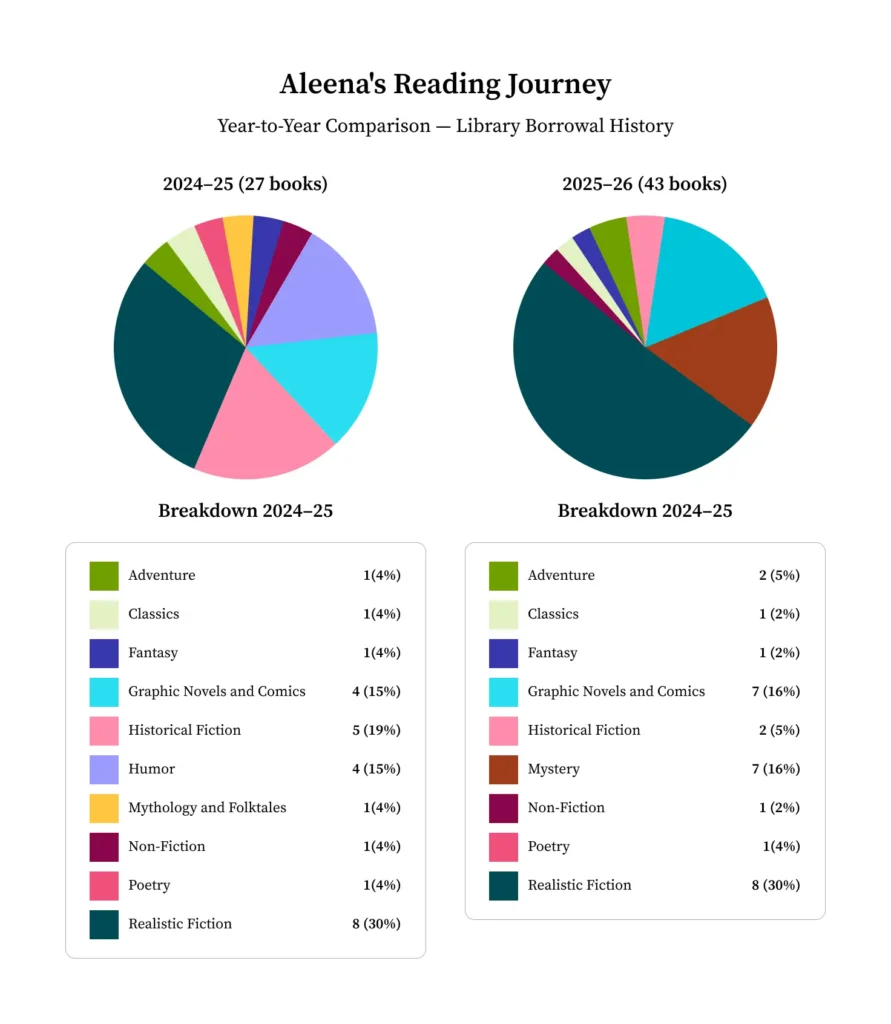
Neev does not believe there is such a thing as a non-reader. There are only children who have not yet found the right book.
A festival that started doing more
The early editions of NLF looked like a small Jaipur Lit Fest. Panels, big names, conversations that worked for the adults in the room. The children were not engaging. They did not want to sit through panel discussions. They wanted to spend time with the people who actually made the books. So the festival shifted to small workshops. Thirty-five students in a room with an illustrator, learning how she chooses a medium. A writer walking them through the conflicts that shaped his memoir. That format stuck.
Over time, the festival began to do more than celebrate reading. It began to support the people making the books. The Neev Book Award, launched in 2018, recognises children’s literature that helps young readers understand India, Indian lives, and Indian stories. A global jury of librarians, writers, and educators reads, shortlists, and picks a winner each year. Parents and teachers across India now use the Neev shortlists to find Indian books worth putting in a child’s hands. Neev students did not always agree with the jury’s picks, so they started their own award. The Student Choice Award, designed entirely by students, uses a rubric modelled on the Carnegie Medal Shadowers’ Prize and picks winners based on what students think matters in a children’s book.
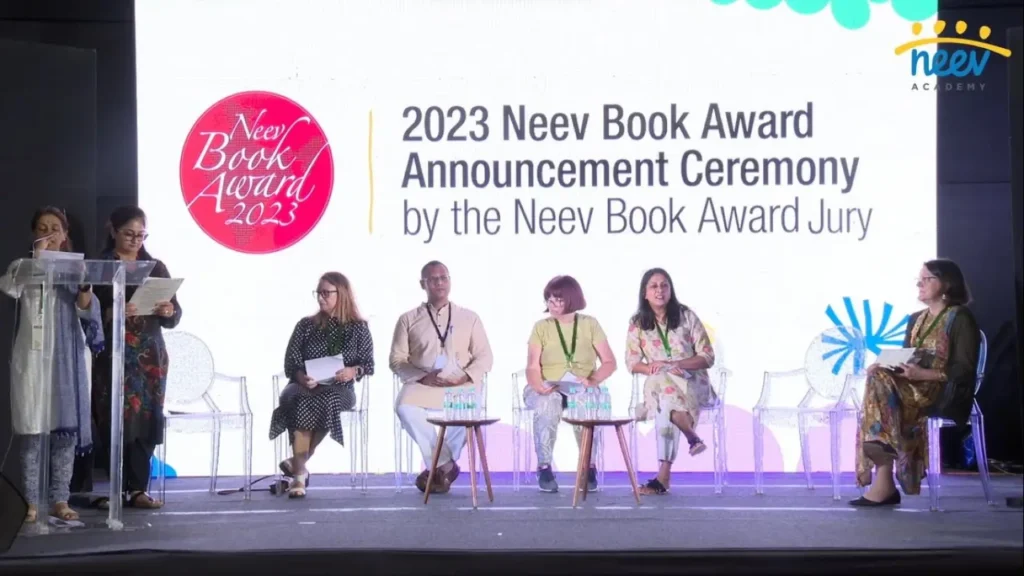
The NLF Fellowship is the school’s investment in the next generation of Indian children’s book writers. It gives selected authors the time and money to work on a book without rushing it. In India, a children’s book author typically earns around ₹30,000 for a book, roughly $350. The book usually goes out of print within a year or two, and there are no royalties after that. Most writers move quickly from one book to the next because the economics do not reward spending more time on any single one. The fellowship pays ₹6 lakhs, twenty times what a book would earn, so a writer can spend the time a good book actually takes. The current fellows are published authors from Goa, Bangalore, and Nagaland.
The Reading Challenge
The Reading Challenge started as a competition between schools. Each year, Neev curated a list of thirty books. Student teams from participating schools read them over three months. They then came to NLF for a quiz on the books, with the winning team announced at the festival.
The format started during the pandemic with 37 schools. Within a few years, it had grown to hundreds. But the competition was starting to crowd out the reading itself. Students were reading to win the quiz, not for the books. So Neev changed the format. A school can now actively oversee how many of its students read the books, not just how a few top readers perform. The competition is no longer about producing winners. It is about how much reading actually happens inside each school. This year, 706 teams signed up to compete.
The students run it
The festival had always felt like what Kavita calls “ghar ki shaadi,” a family wedding, with teachers and parents hosting the outside world. That changed in September 2022. When the festival returned in person after two years of pandemic restrictions, the adults found themselves with nothing to do. The students had taken over. Students emcee sessions, introduce authors, manage crowds, and interview visiting writers. There is a student leadership team that runs the festival: chair, co-chair, heads of volunteering, multimedia, and design. Each year, the outgoing students choose and train the next cohort.
Last year’s chair, Sahasra ran the festival with spreadsheets, WhatsApp groups, and task lists. On Sunday evening, after the festival ended and the teardown was underway, it started to rain. School was the next morning. She was still on the grounds, shaking hands and thanking people for coming.
When students run the festival, reading stops being something the school is asking them to do. It becomes something they are doing for each other. That is the part no adult programming can replicate. Across the marketplace, the workshops, and the stage, the students are not just helping out. They are the festival.
What other schools might consider
Every school wants its students to read more, especially now, with so many things competing for their attention. The benefits of reading are not in question. The problem is that wanting it is not enough. A festival like NLF might help, but the more important lessons from Neev are not about the festival itself. They are about what runs underneath it.
The festival is the visible part. The daily work is what makes it possible. NLF works because reading is already running the other fifty-one weeks of the year. Nine full-time staff. One-on-one conversations with students. Annual reading reports. Books bought when students ask for them. A library that functions as a hub, not a period on the timetable. Without that foundation, a festival changes nothing.
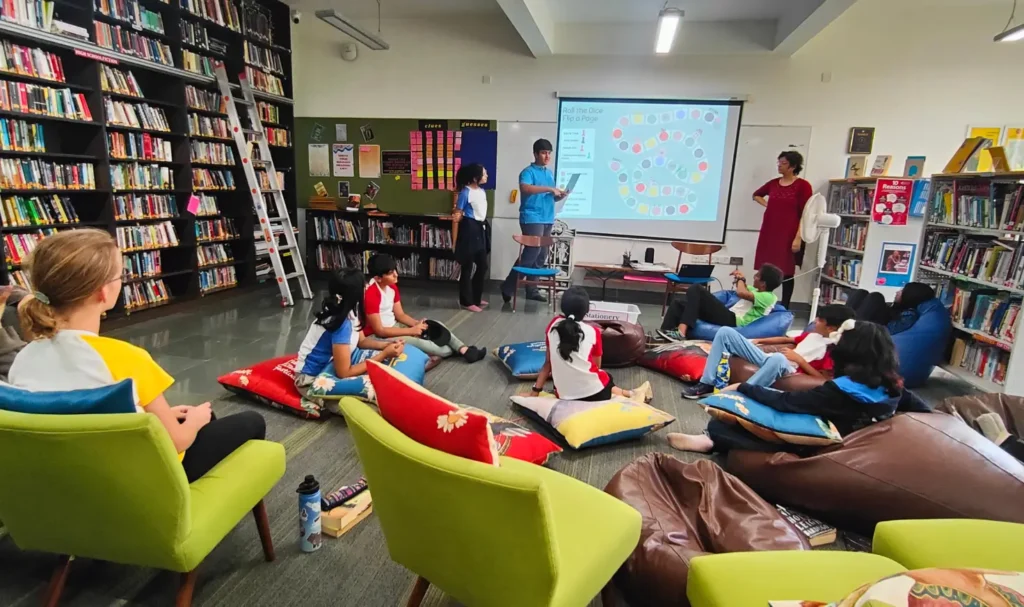
Treat reading as a design problem, not a moral appeal. Children do not read more because adults tell them books matter. They read more when the next good book is easier to find, when adults around them read, and when reading is not graded. Every Neev structure, from reading ladders to summer lists to the annual report, is built to lower the friction between a child and a book they might love.
Give students real ownership. Reading becomes a culture when students stop seeing it as the school’s project and start treating it as theirs. At Neev, students built their own award when they disagreed with the jury. They run the entire festival. The Reading Challenge was redesigned so a school can oversee how students actually read. Most schools give students decorative roles in initiatives the adults still control. Neev gave them the thing itself.