





















How Toddle connects curriculum mapping, unit planning, and daily lessons

Key takeaways
- 01
Toddle connects curriculum maps, courses, units, and daily lessons on one platform, so curriculum goals guide everyday teaching, and insights from the classroom inform how the curriculum evolves.
- 02
Schools can take two approaches to course planning on Toddle: central teams can create and distribute blueprint courses across classes or campuses, or teachers can design their own courses with the curriculum goals always in view.
- 03
Toddle offers unit planning templates tailored to IB, Cambridge, Understanding by Design (UbD), and other frameworks. Built-in AI helps teachers draft course outlines, units, and lessons aligned with learning goals.
- 04
Curriculum analytics helps school leaders track coverage of standards, skills, competencies, and learning objectives across grades and subjects.
- 05
Schools can publish their curriculum on a public website for families and accreditation bodies, with updates automatically reflected as the curriculum evolves.
Bringing curriculum planning and everyday teaching together
“I don’t think a great curriculum can ever stand still. If it does, it stops being great,” says curriculum expert Heidi Hayes Jacobs in a conversation on Toddle’s School Leaders Project podcast. We couldn’t agree more.
At Toddle, we believe the curriculum should actively shape everyday teaching, and everyday teaching should, in turn, shape the curriculum.
That’s why we’ve brought the two together on one platform. Everything from district-wide and school-wide curriculum maps to courses, units, and daily lessons connect on Toddle. Teachers can plan with the larger curriculum goals always in view. As they adapt their plans to students’ needs, their insights can inform how the curriculum evolves.
For schools currently working across separate curriculum maps, planning documents, lesson planners, and spreadsheets, the value goes beyond having everything in one place. It is about keeping curriculum intentions connected to what actually happens in classrooms.
Here’s how that connection works, from the vision school leaders set to the lessons teachers plan every day.
How does Toddle connect curriculum maps with everyday teaching?
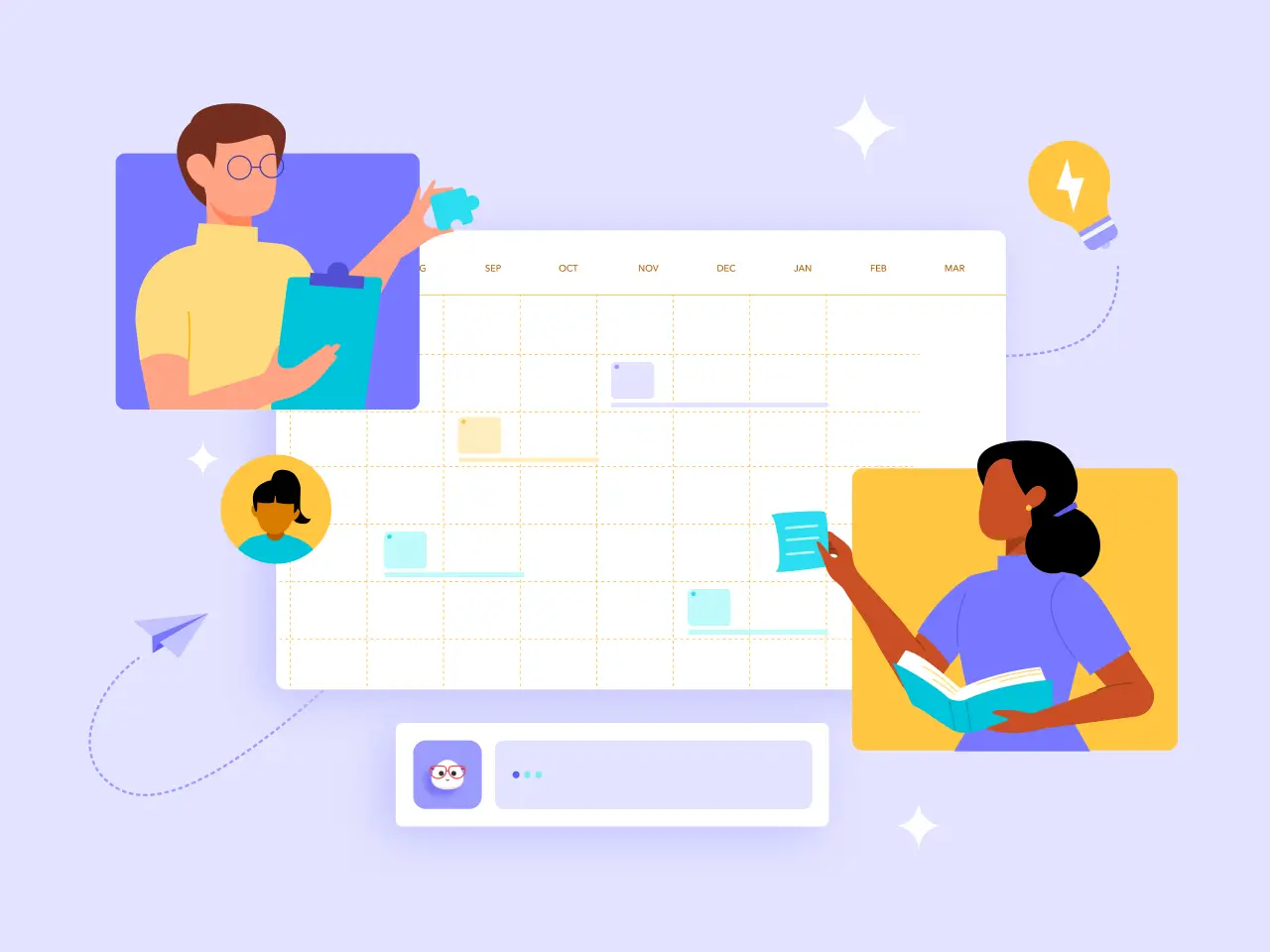
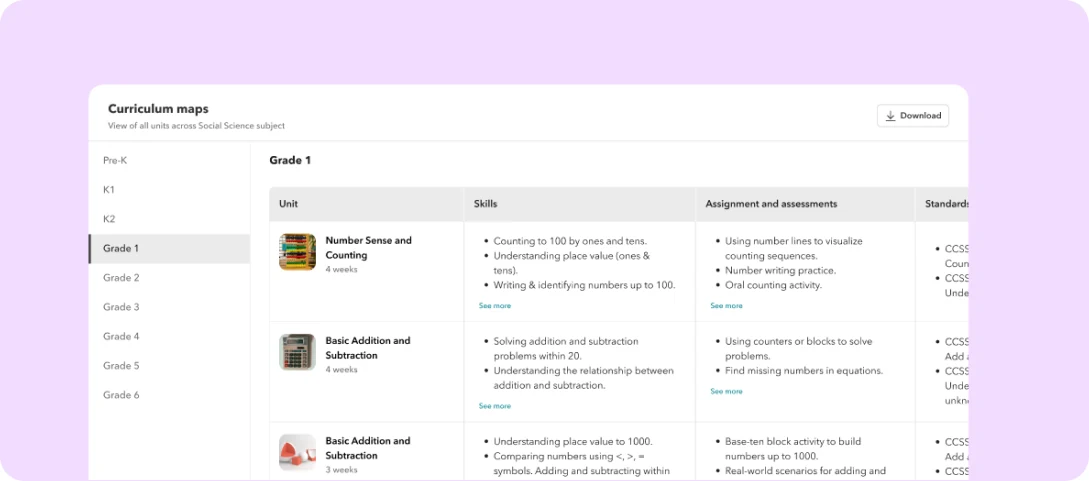
Curriculum mapping is where a school’s educational vision begins to take shape. School leaders define learning objectives, organize content across grades and subjects, and map how learning should progress through the years. Toddle brings these decisions together in visual curriculum maps connected to the courses and units teachers work with.
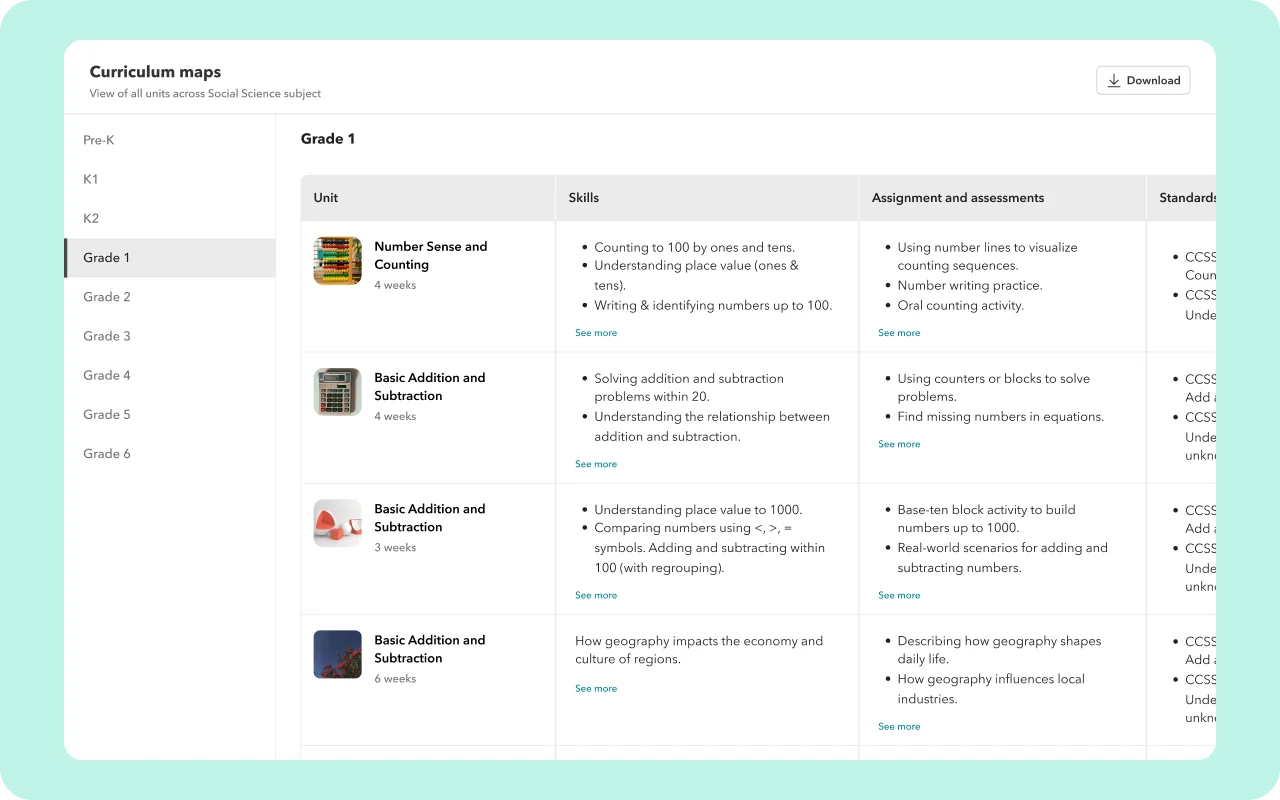
The real value of building this map on Toddle lies in what happens next.
Rather than living in a silo, the curriculum map becomes part of the school’s everyday work. Coordinators, grade-level leaders, and teachers can refer to it where they plan and teach. When teachers refine learning goals or units in response to what they are seeing in classrooms, the wider curriculum view is updated automatically to reflect that work.
For teachers, this means the curriculum is no longer simply something they “follow”. They have a voice in shaping it. For leaders, it means greater visibility into how the curriculum they envisioned is taking shape across the school.
But a shared map raises another question. How much should be consistent across classrooms, and where should teachers have room to make their own decisions?
Can schools standardize curriculum planning while giving teachers flexibility?
One of the most important decisions in curriculum design is finding the right balance between coherence and teacher agency. Common courses and units bring consistency across classrooms and campuses. The freedom to adapt them allows teachers to respond to their students’ interests, needs, and local contexts.
On Toddle, schools can strike the balance that works for them through two approaches: blueprint courses designed by central teams and shared across classes or campuses, and teacher-led courses created by individual teachers.
With blueprint courses, leaders can define a common sequence of units and shared learning goals without prescribing every lesson. Teachers can design learning experiences and assessments within that structure. Teacher-led courses offer more autonomy, allowing educators to create courses, units, and lessons that respond to their students while remaining aligned with broader curriculum goals.
Both approaches tie back to the curriculum map. A school can protect the coherence of its curriculum without making every classroom look the same.
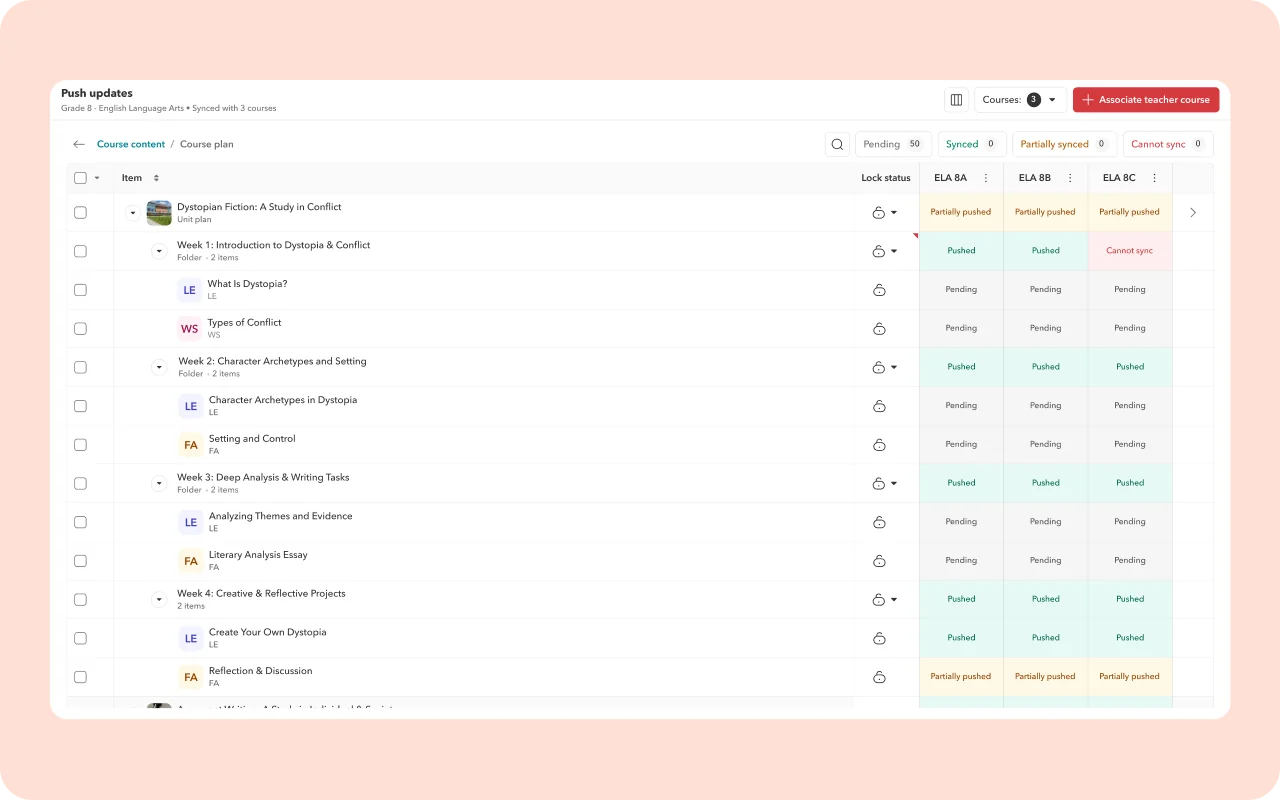
At Enko Education, this balance matters across more than 15 campuses in eight countries. Teachers use Toddle to share courses, exchange ideas, and build on one another’s work while retaining the flexibility to plan for different curricula, languages, and local contexts.
Once a school has established that shared structure, the most creative work begins: turning curriculum goals into units that teachers and students can make their own.
How does Toddle support collaborative and AI-powered unit planning?
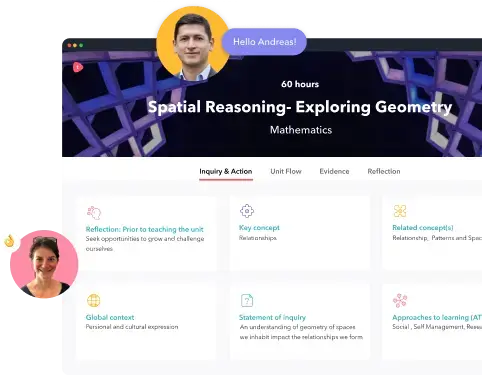
Unit planning is where the curriculum truly comes to life, and where teachers do some of their most creative and reflective work. They bring together learning goals, experiences, resources, assessments, and opportunities to respond to what students need next.
Toddle’s unit planners are built around four ideas: curriculum-specific structure, one connected planning space, AI as a creative partner, and collaboration throughout the process.
Planning that reflects the curriculum
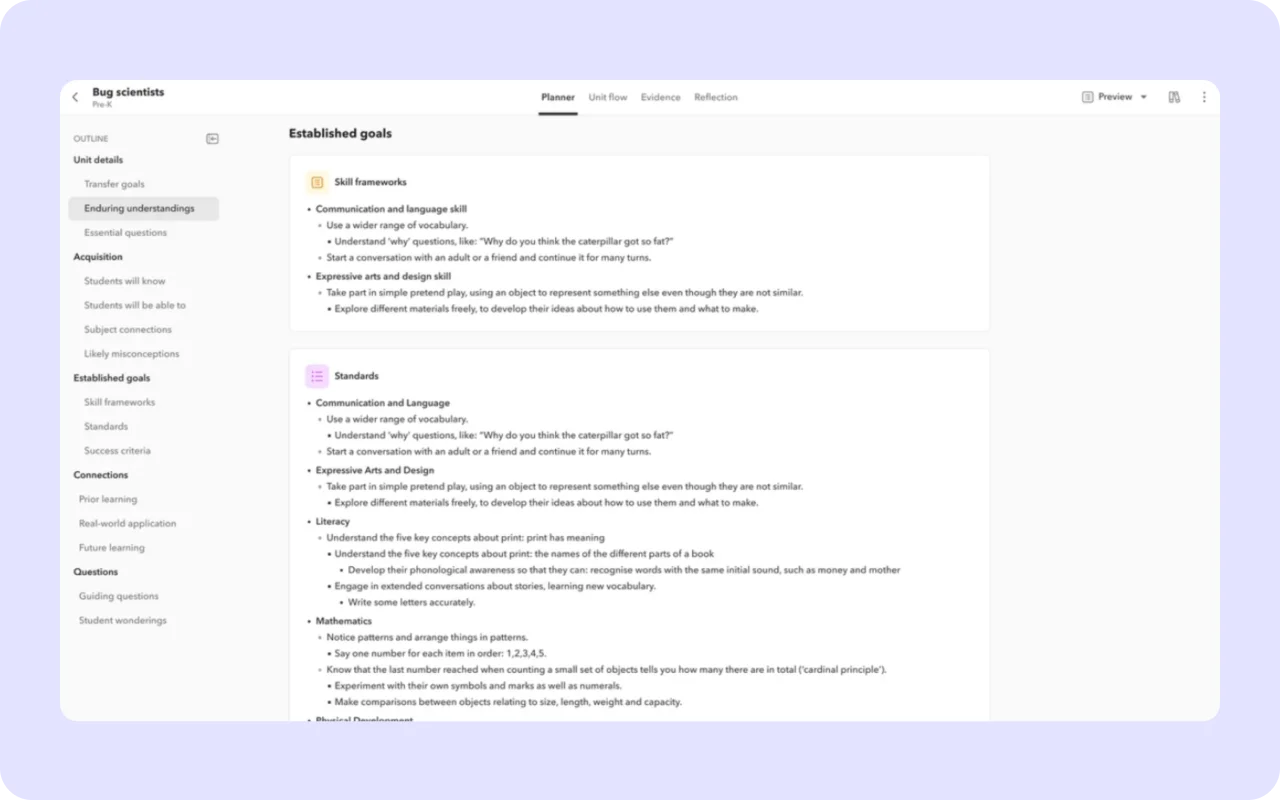
Toddle offers unit planning templates tailored to IB, Cambridge, Understanding by Design (UbD), and other frameworks. Their structures reflect the planning principles of each curriculum, with relevant standards available within the planning experience. Teachers can spend less time setting up documents and more time designing learning.
Everything in one planning space
Learning goals, experiences, resources, assessments, and reflections can live together in the unit planner. Teachers can see how these elements relate to one another rather than continually moving between separate documents. The unit remains connected to the wider curriculum that gave it purpose.
AI as a creative planning partner
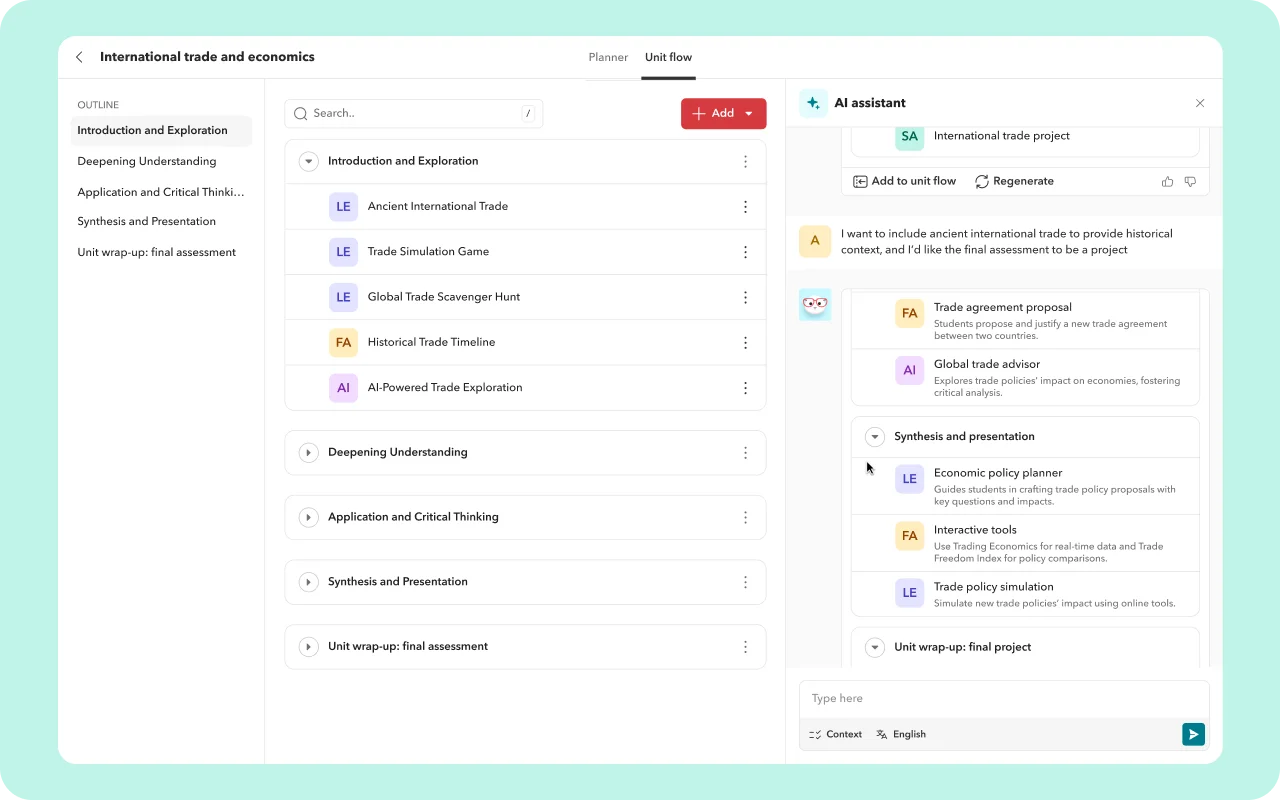
Teachers can use Toddle AI to explore an initial unit outline, brainstorm learning experiences, plan for differentiation, integrate skills, and develop assessments and rubrics aligned with their goals. The point is not to hand over instructional judgment. It is to help teachers generate ideas, question their first draft, and refine the learning they want to create.
Collaboration as plans take shape
Teachers can access one another’s planners, exchange ideas, and leave feedback as units develop. Planning becomes an ongoing conversation rather than a document passed around by email or revisited only in the next meeting.
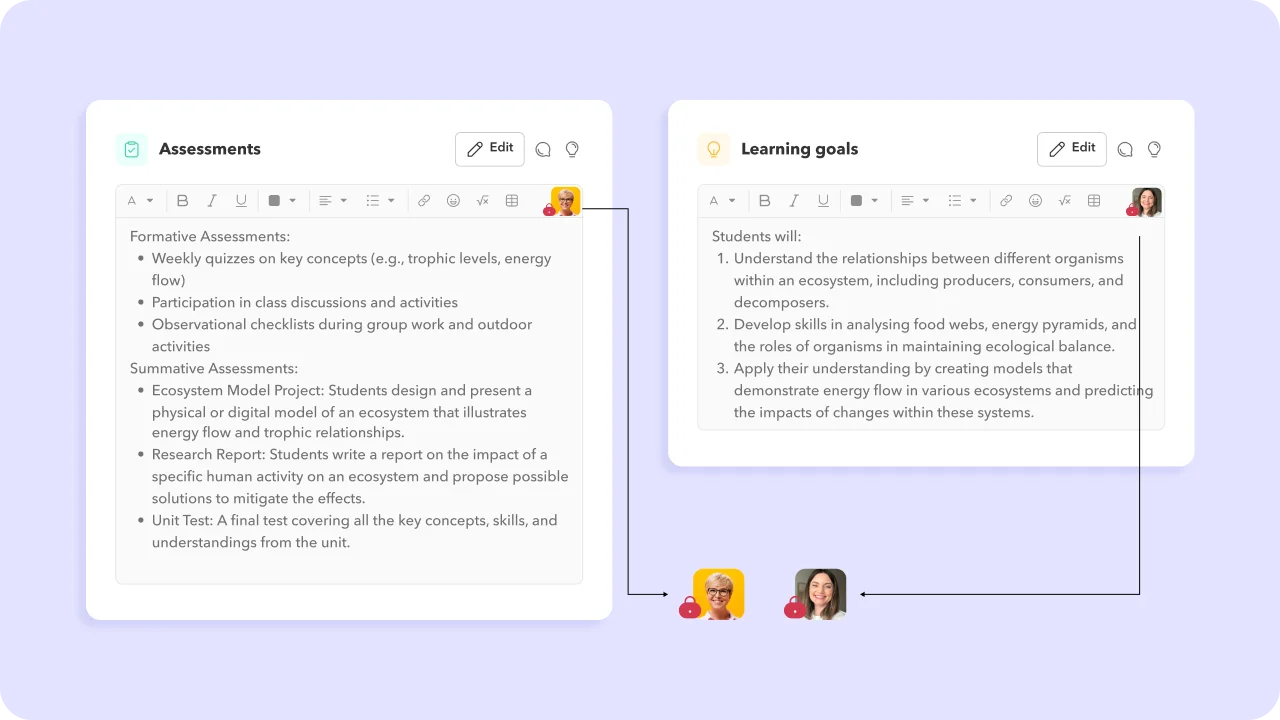
At Raffles World Academy in Dubai, more than 100 educators across eight grade levels plan collaboratively on Toddle. They previously had to navigate hundreds of planning documents. Now they work within a common planning structure, access one another’s planners, and exchange feedback in real time.
And the connection does not stop at the unit. It becomes particularly important when teachers move into the unpredictability of everyday lessons.
How does Toddle keep daily lessons aligned with curriculum goals?
This is often where the planned curriculum and what is actually taught begin to drift apart. Curriculum goals may be clear at the start of the year, but daily teaching is responsive. Questions emerge, interests change, and teachers adjust their plans to the learners in front of them.
Toddle keeps curriculum intentions visible during lesson planning. Teachers can see and tag the relevant standards and learning goals as they design lessons, with those connections reflected in the wider curriculum map.
A teacher can follow a worthwhile student question or adapt a learning experience without losing sight of the intended learning. Curriculum alignment becomes part of planning itself, not a separate box to check afterward.
At Trinity Lutheran College in Australia, teachers use Toddle to plan lessons with the wider curriculum in view rather than switching between daily lesson plans and separate curriculum documents. They can tag the specific learning goals their lessons address.
The same collaboration and AI support available during unit planning carries through to daily lessons. At International College in Lebanon, curriculum coordinator Layal Tayara and her team use Toddle AI not simply to plan faster, but to explore ideas more deeply, refine their lessons, and differentiate for learners. For them, AI is a way to raise the quality of planning, not just reduce the time it takes.
When curriculum maps, units, and lessons are connected, school leaders gain something just as important as better planning: a clearer view of the curriculum taking shape across the school.
How can school leaders identify curriculum gaps, overlaps, and alignment issues?
For busy school leaders, a coherent curriculum map is valuable. But they also need to know what it reveals. Which standards are getting attention? Where might there be gaps or unnecessary repetition? How does learning build from one grade to the next?
Toddle’s curriculum analytics provides ready-to-use dashboards that help leaders examine how standards, skills, competencies, and learning objectives are addressed in curriculum plans across subjects and grades. They can identify potential gaps and overlaps, examine vertical and horizontal alignment, and review the progression of planned learning.
The same visibility can extend to priorities unique to a school, such as learner competencies, the UN Sustainable Development Goals, or custom learning outcomes. Leaders can create views that show how these priorities appear across grades and subjects.
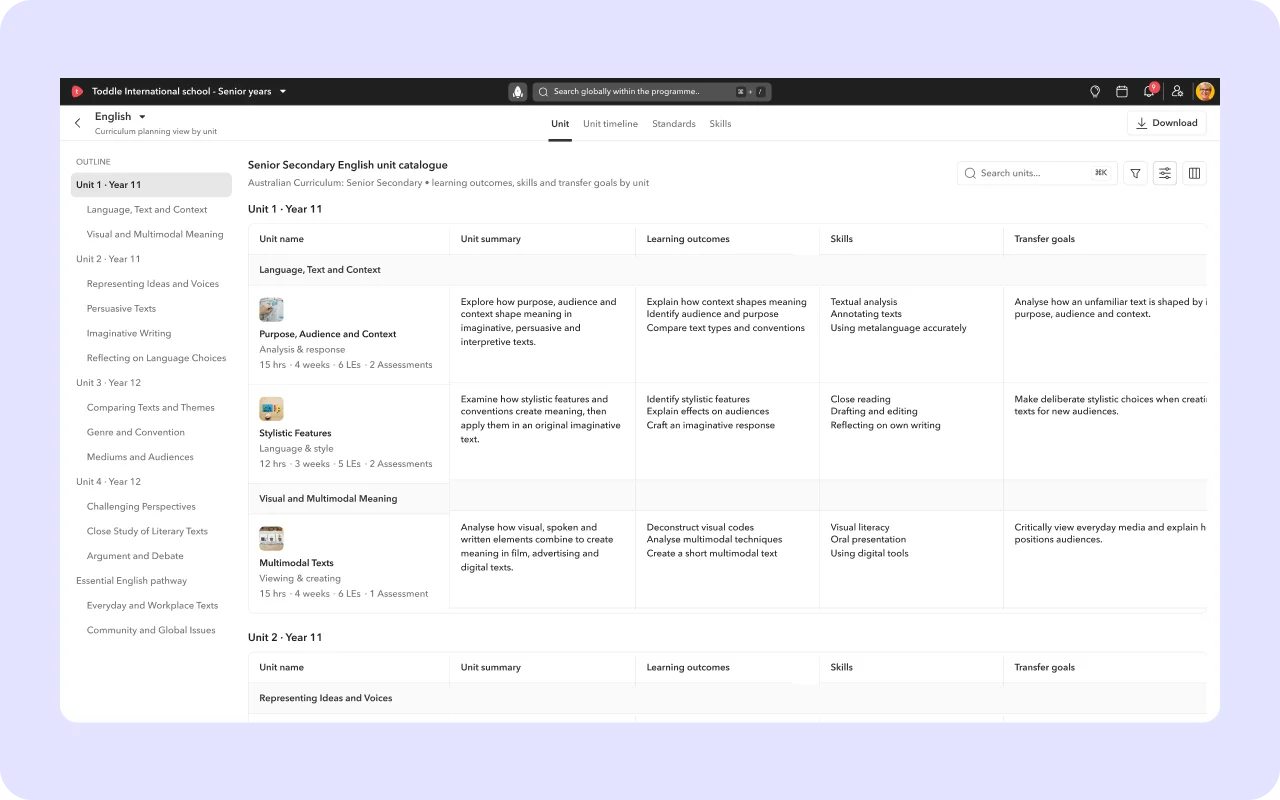
At GEMS International School, Al Khail, curriculum coordinators once spent hours maintaining spreadsheets to track which concepts and skills teachers were covering. With Toddle, they have real-time visibility into coverage as units are planned. According to coordinator Mark Krabousanos, this saves the leadership team at least two hours each day, giving them more time to analyze and improve the curriculum instead of managing data.
These insights show what is represented in planning. They help leaders ask better questions about coverage and alignment, alongside the other evidence schools use to understand what students have actually learned.
And a curriculum that is visible and useful to educators can also become more transparent to the community around them.
Can schools publish their curriculum directly from Toddle?
Curriculum visibility should not stop with teachers and school leaders. Families, accreditation bodies, and the wider school community can also benefit from understanding what students are learning and the thinking behind the school’s approach.
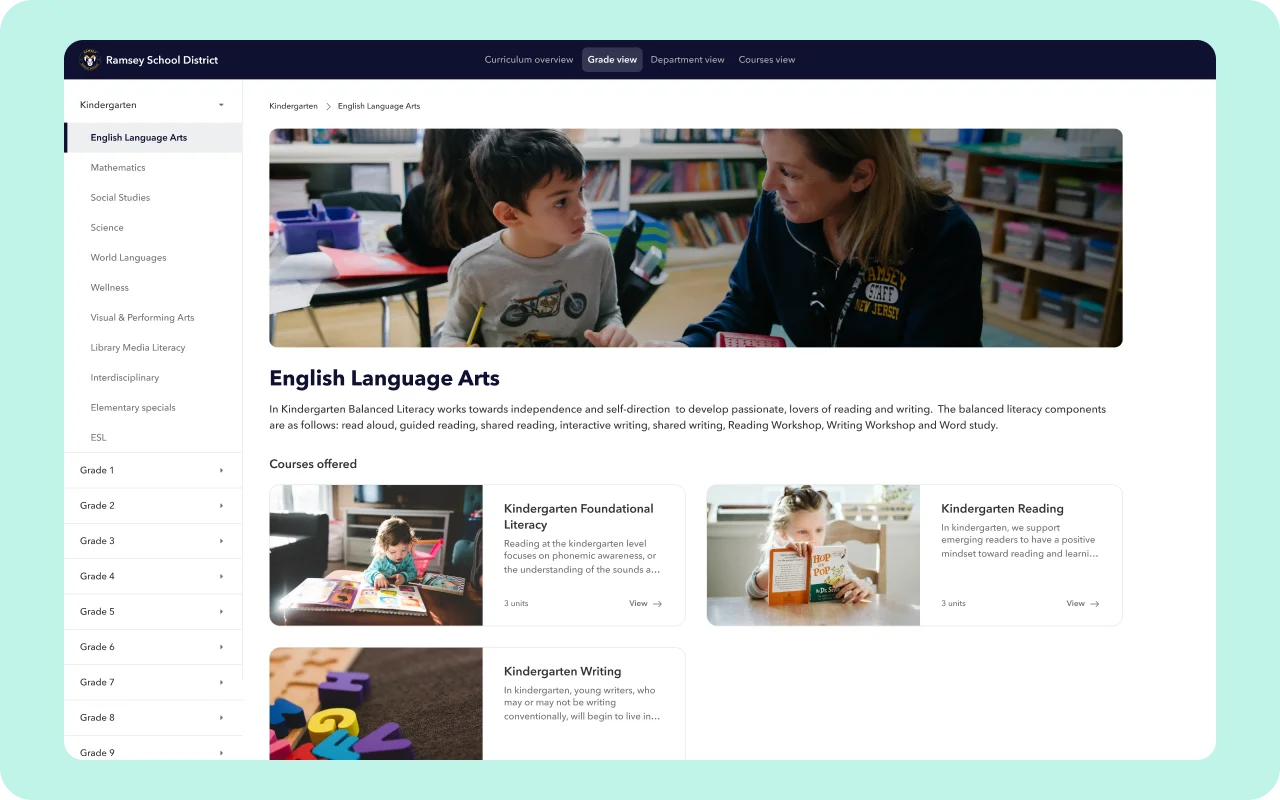
Toddle allows schools to publish their curriculum on a public-facing website. They decide what to share, how the website looks, and how much detail to show from curriculum maps, courses, and units.
Because publishing happens from the same platform where the curriculum is planned, schools can keep the public view up to date as their curriculum evolves. There is no need to recreate the curriculum in a separate set of documents or maintain an unrelated website just to explain it.
One connected curriculum, from intent to everyday practice
Schools often use one tool for curriculum mapping, another set of documents for unit planning, and separate systems for daily lessons and reporting on coverage. The challenge is not simply the number of tools. It is the effort required to keep curriculum intent and classroom practice connected. Toddle brings curriculum maps, courses, units, lessons, analytics, and publishing into one planning experience. Schools can maintain shared goals without limiting teacher agency, and teachers can adapt their plans without losing sight of the bigger picture.
To borrow another beautiful thought from Heidi Hayes Jacobs, “Curriculum mapping is an electronic town square.” That is the vision we have built Toddle around: a shared space where school leaders bring their vision, teachers bring their deep understanding of learners, and learners bring their wonderfully varied curiosities.
A curriculum that belongs to the entire school community and grows richer because of it.